✨ Byte-Sized Overview
Space is vast, humanity has supposedly grown up, and the most reassuring man in the galaxy is in charge of the ship.
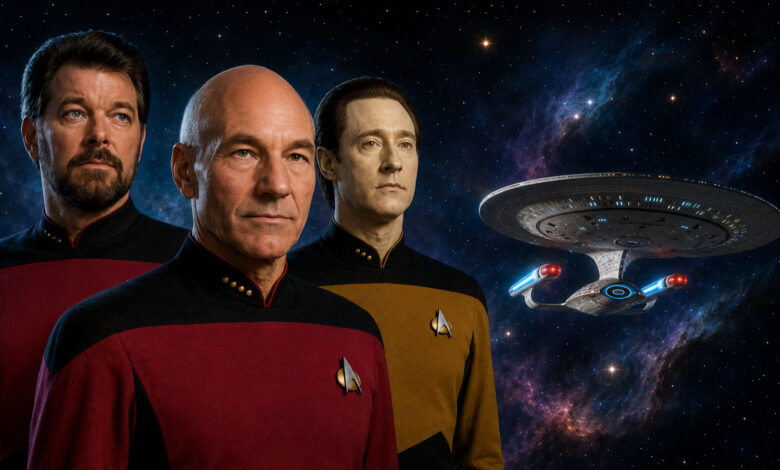
Star Trek: The Next Generation follows Captain Jean-Luc Picard and the crew of the USS Enterprise-D as they explore unfamiliar worlds, negotiate impossible disputes and encounter beings who make humanity look distinctly underqualified for interstellar travel.
It’s adventurous, thoughtful and occasionally gloriously strange. One week brings a confrontation with a terrifying enemy; the next asks whether an artificial person has the right to refuse an experiment.
The early episodes can be uneven, but stick with it. Once this crew finds its rhythm, The Next Generation becomes something special: a vision of the future where intelligence, curiosity and compassion are strengths worth celebrating.
🎬 Transmission Details
- Show title: Star Trek: The Next Generation
- Years: 1987–1994
- Created by: Gene Roddenberry
- Network (US): First-run syndication
- Network (UK): BBC Two; also Sky One, which later held first-run rights
- Seasons: 7
- Episodes: 178, counting the feature-length premiere and finale as two episodes each
- Starring: Patrick Stewart, Jonathan Frakes, Brent Spiner, LeVar Burton, Michael Dorn, Gates McFadden, Marina Sirtis, Wil Wheaton and Denise Crosby. Diana Muldaur joins the principal cast in Season 2, with notable recurring appearances from Whoopi Goldberg and John de Lancie.
Viewing note: No previous Star Trek experience is required. Start with Encounter at Farpoint and watch in broadcast order. The series becomes more consistent from Season 3, but the first two seasons contain important introductions and some excellent episodes. It also has a proper television finale: the subsequent films continue the crew’s adventures rather than supply a missing ending.
🎯 Signal Strength
- IMDb: 8.7/10
- Rotten Tomatoes: 92% critics / 90% audience — series averages
- Skully’s take: Proof that a bald man with a cup of Earl Grey can make a staff meeting more gripping than most space battles. Though somebody really should investigate the holodeck’s safety certification.
📼 Spoiler Mode: Story Sync for Pub Chat
Major spoilers ahead, including significant character developments and the series finale.
Set in the 24th century, The Next Generation begins with the Enterprise-D embarking on its mission under Captain Jean-Luc Picard. This is a larger, more comfortable Enterprise than Kirk’s: a travelling community carrying officers, scientists and families into situations that rarely justify bringing the children.
Its first major encounter establishes the series’ central argument. The powerful entity Q puts humanity on trial, treating its violent history as evidence that it has no business exploring the galaxy. At Farpoint Station, Picard answers that challenge through investigation and compassion, discovering that an apparently miraculous facility conceals an imprisoned life-form. Understanding the situation matters more than overpowering it.
Unlike a heavily serialised space opera, the show doesn’t build towards one continuous war or conspiracy. Its larger story emerges through relationships, recurring adversaries and the gradual testing of the Federation’s principles. The crew becomes a community whose members understand one another’s strengths, weaknesses and occasionally disastrous recreational choices.
Data, the Enterprise’s android officer, sits at the centre of some of its strongest ethical questions. In The Measure of a Man, a scientist wants to dismantle him to advance research into artificial life. When Data refuses, the dispute becomes a hearing over whether he can make that decision at all. Picard argues for his freedom, while Riker is reluctantly required to present the opposing case. The ruling protects Data’s right to choose without pretending to settle every question about consciousness.
The series’ most devastating recurring threat arrives through the Borg: a collective that absorbs individuals and civilisations into itself. In The Best of Both Worlds, Picard is captured and assimilated as Locutus, turning the crew’s trusted captain into the enemy’s spokesperson. His knowledge helps the Borg inflict catastrophic losses on Starfleet at Wolf 359.
Riker must lead without Picard, and the Enterprise crew eventually retrieves him. Data accesses the Collective through their captain, using Picard’s suggestion to trigger the Borg’s regeneration cycle. The immediate threat is defeated, but Picard’s recovery isn’t simply a matter of removing the machinery. The following episode, Family, allows him to confront the helplessness and shame left behind.
Elsewhere, Worf discovers that the Klingon Empire’s enthusiasm for honour doesn’t always extend to its politicians. When his father is falsely accused of treason, Worf accepts public disgrace to prevent a destabilising revelation and protect his brother. His later involvement in Klingon power struggles repeatedly forces him to choose between cultural belonging and personal integrity.
Not every defining story needs a fleet battle. In The Inner Light, an alien probe makes Picard experience decades as a man called Kamin, with a wife, children and a home on a dying world. Only minutes pass aboard the Enterprise. The experience preserves the memory of a lost civilisation, leaving Picard with another lifetime’s emotional weight and a flute he now knows how to play.
The finale, All Good Things…, returns to Q’s judgement of humanity. Picard moves between the past, present and a possible future, discovering that his investigation is helping create the anomaly threatening human existence. He must think beyond a straightforward sequence of cause and effect, coordinating his crews across time to resolve it.
The closing scene brings the scale back down beautifully. Having glimpsed a future in which his friends drift apart, Picard finally joins their poker game. After seven seasons of exploring the universe, the captain recognises the value of taking a seat at his own family’s table.
🧠 Vibe Check
- 🖖 Optimistic exploration with serious ethical questions beneath the comfortable uniforms
- 🧩 Scientific mysteries, first-contact misunderstandings and problems that reward careful thinking
- 👥 A capable ensemble whose friendships become as important as their missions
- 🌌 Cosmic wonder, unsettling encounters and occasional holodeck-related nonsense
Perfect if you like: Star Trek: The Original Series for exploration and moral dilemmas, Star Trek: Voyager for its shipboard community, or The Orville for affectionate character relationships and thoughtful science-fiction storytelling.
🚀 Why It’s a Sci-Fi Icon
- 🛸 It proved Star Trek could thrive with a new crew: Replacing Kirk, Spock and McCoy was no small undertaking. The Next Generation succeeded by developing its own character rather than simply recreating the original. Picard’s Enterprise feels more diplomatic, more collaborative and distinctly its own place to spend time.
- ⚖️ It made ethical debate genuinely dramatic: Some of the show’s strongest confrontations take place in hearings, laboratories and briefing rooms. Questions about individual rights, cultural interference and the limits of duty have consequences for people we care about. The discussion isn’t a pause before the action; frequently, it is the action.
- 🧑🚀 Picard offered a different model of leadership: Patrick Stewart gives the captain authority without making him infallible. Picard listens, weighs evidence and expects to justify his decisions. His restraint makes the moments when he becomes angry, vulnerable or uncompromising especially powerful. He can command a room without treating everyone in it as an obstacle.
- 🤖 Data made artificial intelligence a personal question: Rather than presenting an android solely as a threat or a technological marvel, the series makes him a colleague and friend. His efforts to understand humour, creativity and connection expose the oddness of human behaviour while asking what qualities actually make someone worthy of respect.
- 🌍 Its optimism had substance: The Enterprise crew generally wants to behave decently, but good intentions don’t remove uncertainty. Their principles are tested by fear, competing obligations and unfamiliar cultures. At its best, the series argues that progress requires continual effort, not merely better engines and a wardrobe without pockets.
- 📺 It demonstrated the range of episodic science fiction: A courtroom drama, a disturbing encounter, a time-loop puzzle and a quiet character study can all belong to the same programme. That flexibility is central to its appeal. You return for familiar people, without knowing what kind of story they’ll find themselves inside next.
🔦 Deep Dive Highlights
- 🫖 Captain Jean-Luc Picard: A diplomat, scholar and explorer who initially keeps a careful distance from his crew. Beneath the formal manner sits considerable warmth, curiosity and vulnerability. Stewart makes the thoughtful silences count as much as the speeches, giving the series a centre of gravity even when the surrounding story gets decidedly peculiar.
- 🤖 Data: The android operations officer approaches humanity with a mixture of precision and sincere bewilderment. Brent Spiner finds comedy without reducing him to a joke. Data’s friendships, creative experiments and awkward attempts at everyday conversation gradually make his supposedly inhuman perspective one of the show’s most emotionally engaging elements.
- 👥 Riker and the Bridge Crew: Riker’s confidence complements Picard’s reserve, while Geordi brings engineering ingenuity, Troi emotional insight and Beverly Crusher medical judgement. Their different specialities matter because solutions usually require cooperation. This isn’t simply a brilliant captain surrounded by assistants; the Enterprise works because its crew knows how to think together.
- ⚔️ Worf: A Klingon raised by humans, serving in Starfleet while trying to honour a culture he often experiences from the outside. His sternness provides plenty of humour, but his divided loyalties give him real depth. The gap between his ideals and Klingon political reality is particularly fertile storytelling territory.
- 🎭 Q: All-powerful, theatrical and spectacularly uninterested in respecting anyone’s schedule. John de Lancie makes Q both entertaining and unnerving: a being who can reduce the Enterprise’s technological advantages to nothing. His appearances challenge Picard’s certainty and raise the uncomfortable possibility that humanity’s greatest discoveries might begin with admitting how little it understands.
- 🛰️ The USS Enterprise-D: More than transport between adventures, the ship is a home. Ten Forward, the observation lounge, personal quarters and the holodecks give its community room to exist beyond emergencies. Guinan’s presence adds quiet perspective, while the familiar interiors become reassuring even when something deeply unreasonable is happening outside the windows.
Star Trek: The Next Generation takes time to find its voice, and not every strange new world deserves a return visit. But at its best, it combines imaginative science fiction with a profound affection for people trying to become better. Come for the Enterprise. Stay for the crew — and the belief that the future might still be worth looking forward to.
Recommended Sci-Fi TV Products
Watch The Expanse on Prime Video
Amidst political tension between Earth, Mars and the Belt, the single greatest conspiracy of all time must be unravelled.
Watch Now!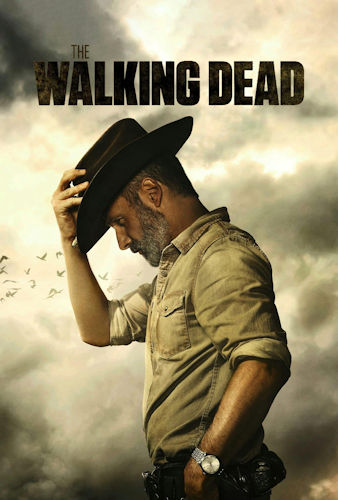
Watch The Walking Dead on Prime Video
County Sheriff Rick Grimes, his wife, son and a small eclectic group try to survive constant attacks from zombies and other threats.
Watch Now!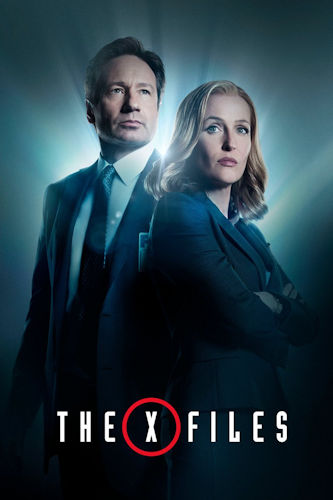
Watch The X-Files on Prime Video
A young FBI agent is assigned watchdog duty over a fellow agent, but finds herself drawn into his investigations of paranormal and unexplained phenomena.
Watch Now!As an Amazon Associate I earn from qualifying purchases.