✨ Byte-Sized Overview
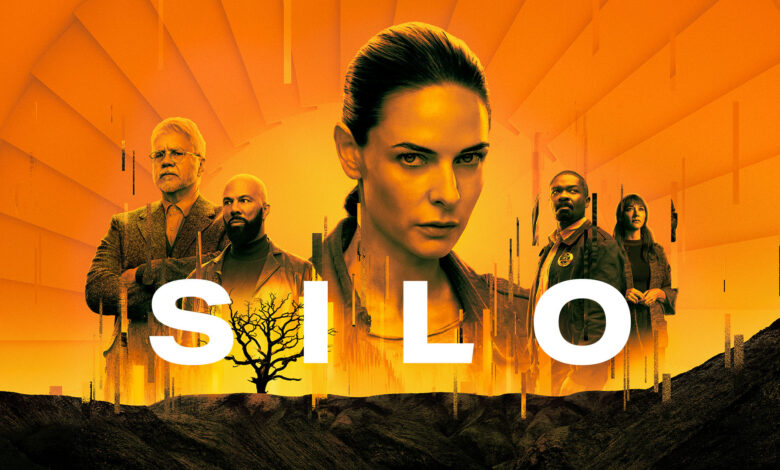
Ten thousand people live beneath the earth in a vast concrete silo. They work, raise families and maintain the machinery that keeps their enclosed civilisation alive. What they cannot do is explain who built their home, why they are there, or how much of their official history deserves to be believed.
Based on Hugh Howey’s novels, Silo combines dystopian science fiction with a detective story and a slow-burning political thriller. Rebecca Ferguson stars as Juliette Nichols, an engineer whose determination to investigate a death brings her into conflict with people who regard unanswered questions as a threat to public safety.
The appeal goes beyond discovering what lies outside. This is a world where repairing a generator can be as consequential as exposing a conspiracy, and where an ordinary object becomes dangerous if it reveals something about the past. Come for the mystery; stay for the unsettling possibility that the maintenance department understands civilisation rather better than the people governing it.
Across its first three seasons, the story grows from one suspicious death into an investigation of the entire silo system. The scale expands, but the series keeps returning to the same compelling question: if survival depends upon a lie, who has the right to reveal the truth?
🎬 Transmission Details
- Show title: Silo
- Years: 2023–present
- Created by: Graham Yost
- Based on: Hugh Howey’s Silo trilogy, comprising Wool, Shift and Dust
- Network (US): Apple TV+
- Network (UK): Apple TV+
- Seasons: 3 released; the fourth and final season will premiere on 9 July 2027
- Episodes: 30 released; 10 episodes in each of Seasons 1–3
- Starring: Rebecca Ferguson, Tim Robbins, Common, Harriet Walter, Chinaza Uche, Avi Nash, Rick Gomez, Shane McRae, Remmie Milner and Alexandria Riley
- Other key cast across the series: Rashida Jones, David Oyelowo, Iain Glen, Tanya Moodie, Steve Zahn, Ashley Zukerman, Jessica Henwick and Matt Craven
- Genre: Dystopian science fiction, mystery, conspiracy thriller
Series information checked on 5 September 2026.
🎯 Signal Strength
- IMDb: 8.1/10
- Rotten Tomatoes: 92% average critics’ score across the three released seasons
- Skully’s take: Ten thousand people, one enormous staircase and an IT department with far too much authority. Suddenly, your office’s password policy doesn’t seem quite so unreasonable.
Ratings checked on 5 September 2026 and may change.
📼 Spoiler Mode: Story Sync for Pub Chat
Major spoilers for Seasons 1–3 follow. No book-only spoilers are included.
The residents of Silo 18 believe they occupy humanity’s last refuge from an uninhabitable world. Their society operates under the Pact, a body of regulations controlling everything from prohibited technology to the consequences of asking to leave. Anyone who goes outside is expected to clean the external camera before dying in the wasteland. Nobody is expected to return.
The first cracks appear when Allison Becker discovers evidence that undermines her faith in the authorities. Her husband, Sheriff Holston Becker, follows her outside, leaving engineer Juliette Nichols to investigate the death of her partner, George Wilkins.
Becoming sheriff gives Juliette access to evidence while placing her under intense scrutiny. Her search connects forbidden relics, concealed surveillance and the deliberate suppression of historical knowledge. Bernard Holland and Robert Sims represent different faces of that control, combining administrative authority with intimidation and force.
The green landscape shown inside a cleaning helmet is ultimately revealed as an illusion, but the devastated world beyond the silo is real. Juliette survives her forced cleaning because Martha Walker arranges for her suit to be sealed with dependable tape. Crossing the landscape reveals an even greater secret: Silo 18 is only one of many underground communities.
Season 2 follows Juliette into the ruined Silo 17, where she meets the deeply isolated survivor known as Solo. Restoring the machinery there becomes essential to her survival and eventual return. In Silo 18, meanwhile, Bernard struggles to contain the unrest caused by Juliette walking over the hill instead of dying in view of the camera.
Mechanical becomes the centre of an organised rebellion. Billings begins placing conscience above procedure, Lukas uncovers Salvador Quinn’s coded warning, and the existence of the Safeguard suggests that the authorities possess a method for destroying an entire silo. Juliette returns because she knows that believing the outside is safe could lead the population to repeat Silo 17’s catastrophe.
The second season ends with Juliette and Bernard trapped in the airlock as its flames ignite. Both survive, but Juliette awakens with damaged memories. Season 3 initially presents her as Silo 18’s new mayor while Camille Sims quietly attempts to control her, using chemicals distributed as vitamin supplements to suppress memories across the population.
As Juliette gradually recovers her identity, the resistance investigates the Safeguard and the hidden power directing the silo’s leaders. Bernard, having reconsidered the system he once defended, eventually sacrifices himself to give the rebels a chance to act.
A parallel story set centuries earlier follows journalist Helen Drew and congressman Daniel Keene. Their investigation exposes preparations for the silos before a catastrophic attack destroys the world above. Helen is deceived into entering what will become Silo 18, while Daniel is separated from her and taken into the command structure of Silo 1.
The finale reveals that Daniel has been repeatedly awakened under the identity “Troy”, his personal memories suppressed while his knowledge and abilities remain useful. During an earlier crisis, Troy ordered the residents escaping Silo 17 to be killed by armed drones. Their deaths were not simply the result of exposure to the outside atmosphere.
The mysterious voice directing IT is also revealed to be Dr Victor Crnkovich in Silo 1 rather than an autonomous computer. When the Safeguard is activated against Silo 18, Camille turns against him. She misrepresents oxygen as poison to buy the rebels enough time to seal the delivery pipe and prevent the population from being killed.
Victor subsequently takes his own life, but leaves Troy an encrypted message identifying the woman haunting his fragmented memories as Helen. In Silo 18, Juliette apparently accepts an offer to leave the other silos alone in exchange for survival. Once beyond the microphone, she explains her real intention: attack Silo 1 before it can threaten them again.
The third season therefore ends with Silo 18 more united than it has ever been, but facing the organisation responsible for controlling every silo. What began as Juliette investigating one death has become a struggle over whether the entire surviving population will continue living under Silo 1’s authority.
🧠 Vibe Check
- 🏢 Claustrophobic architecture, worn machinery and a civilisation built around constant maintenance
- 🔍 A detective story that gradually exposes a much larger political system
- 👁️ Surveillance, restricted knowledge and the suspicion that somebody is always listening
- 🛠️ Practical problem-solving alongside civilisation-sized mysteries
- ⚖️ Conflicting loyalties between family, community, duty and conscience
- 🧠 Questions about memory, identity and who controls the accepted version of history
- ⏳ Deliberate pacing followed by concentrated runs of major revelations
Perfect if you like: Severance for institutional secrecy, Snowpiercer for class divisions inside a closed society, or The Expanse for a lived-in world where engineering and politics cannot be neatly separated.
This remains a patient series. Conversations, repairs and apparently minor discoveries frequently carry more weight than action sequences. Season 3 widens the mythology considerably, although its early memory-loss storyline may test viewers waiting for Juliette to regain her familiar determination.
🚀 Why It’s a Sci-Fi Icon
Silo has not completed its story yet, but three seasons have already established it as one of contemporary television’s most distinctive science-fiction dramas.
- 🏗️ Its setting shapes every part of the story: Distance, stairs, restricted access and dependence upon shared machinery influence how people work, communicate and organise resistance. Social inequality becomes something the characters physically climb through.
- 🛠️ Competence is treated as heroic: Juliette succeeds by observing problems, testing explanations and understanding how systems fail. Her engineering ability is not decorative character background; it repeatedly determines who survives.
- ⚖️ Its politics resist easy answers: The authorities conceal terrible truths, but some of the dangers they warn about are real. The series asks whether protection can justify coercion and whether revealing a lie is responsible when people may act on incomplete information.
- 🧱 The production design makes confinement convincing: Concrete, metal, weathered surfaces and recognisable working spaces make the silo feel inhabited rather than displayed.
- 👥 Supporting characters have credible reasons to hesitate: Resistance carries consequences for families, friends and entire levels. Not everyone can afford Juliette’s confrontational approach, making each decision to oppose authority more meaningful.
- 🧠 Memory becomes a political weapon: Season 3 develops one of the show’s most troubling ideas—the possibility that controlling history is not enough when people’s personal recollections can also be manipulated.
- 📚 The adaptation supports sustained storytelling: Hugh Howey’s premise contains more than a single mystery-box revelation. Each answer expands the moral and political consequences rather than merely replacing one puzzle with another.
🔦 Deep Dive Highlights
- 🛠️ Juliette Nichols: Rebecca Ferguson gives Juliette physical determination, grief and social awkwardness. She can diagnose a failing machine more easily than she can explain what she needs from another person, keeping her compellingly human.
- 🧑💼 Bernard Holland: Tim Robbins makes administrative calm unsettling. Bernard is most interesting when he appears to regard maintaining order as a genuine responsibility, even while committing acts that remain indefensible.
- 🔧 Mechanical and Martha Walker: The lower levels provide Juliette with history, practical knowledge and a community worth protecting. Harriet Walter’s Walker demonstrates how expertise, affection and fear can coexist within the same person.
- 📜 The Pact: The rules operate simultaneously as law, inherited wisdom and social reassurance. Different characters use them to seek protection, claim authority or challenge the people enforcing them.
- 📼 Relics and forbidden knowledge: Everyday objects acquire extraordinary significance once their original context has been erased. A possession the viewer would barely notice can expose an entire world the residents have been prevented from imagining.
- 👮 Paul Billings: Billings provides an effective contrast to Juliette. His growing resistance matters precisely because his instinct is to respect procedure rather than ignore it.
- 🎭 Solo: Steve Zahn brings vulnerability and unpredictability to Silo 17. His story explores what prolonged isolation can do to memory, trust and emotional development.
- 📰 Helen Drew and Daniel Keene: Season 3 allows viewers to experience the creation of the silo system through two people who do not yet understand what they are being drawn into. Their relationship gives the origin story a human cost.
- 🌀 The central staircase: Journeys require time and effort, individual levels develop separate identities, and movement can be watched or obstructed. In this world, simply visiting someone can become a political act.
Skully's Score
Skully's independent editorial rating
Silo is meticulously constructed dystopian science fiction that turns one enclosed environment into an entire social, political and psychological world. Its deliberate pace occasionally tests the patience, but the compelling mysteries, exceptional production design and commanding performance from Rebecca Ferguson give the series an atmosphere and dramatic authority few contemporary science-fiction shows can match.
What works
- Rebecca Ferguson delivers a forceful and emotionally convincing central performance
- The immense practical set makes the silo feel like a functioning society rather than a collection of television locations
- Its layered mysteries unfold carefully while continually raising larger questions
- Political intrigue, social control and personal rebellion are woven naturally into the science-fiction premise
What may not
- The deliberately slow pacing can make some stretches feel unnecessarily prolonged
- Answers are often postponed while additional mysteries continue to accumulate
- Certain supporting performances and subplots are less convincing than the central story
Recommended Sci-Fi TV Products
Watch Fallout on Prime Video
Based on one of the greatest video games of all time, Fallout is the story of haves and have-nots in a world in which there’s almost nothing left to have.
Watch Now!
Watch The X-Files on Prime Video
A young FBI agent is assigned watchdog duty over a fellow agent, but finds herself drawn into his investigations of paranormal and unexplained phenomena.
Watch Now!
Watch The Walking Dead on Prime Video
County Sheriff Rick Grimes, his wife, son and a small eclectic group try to survive constant attacks from zombies and other threats.
Watch Now!As an Amazon Associate I earn from qualifying purchases.