
✨ Byte-Sized Overview
Some science-fiction crews explore the universe to expand humanity’s knowledge. The crew of the Lexx would generally settle for something to eat, somewhere to sleep and an encounter that does not end with somebody trying to kill them.
Lexx follows a collection of deeply unsuitable space travellers aboard a gigantic living spacecraft capable of destroying planets. Their adventures combine grotesque creatures, authoritarian nightmares, sexual farce and unexpectedly melancholy reflections on death and belonging. Imagine a universe where the machinery is disturbingly organic, the authorities are usually monstrous and the person commanding the ultimate weapon has absolutely no qualifications for the job.
Created by Paul Donovan, Lex Gigeroff and Jeffrey Hirschfield, this Canadian-German production occupies one of television science fiction’s strangest corners. It can be inventive, crude, haunting and ridiculous, sometimes within the same scene. Beneath the outrageous costumes and questionable behaviour, however, lies a surprisingly persistent story about damaged outsiders searching for somewhere they might finally belong.
It is not polished, reassuring science fiction. It is the suspicious noise coming from the air vent.
🎬 Transmission Details
- Show title: Lexx
- Years: 1997–2002
- Created by: Paul Donovan, Lex Gigeroff, Jeffrey Hirschfield
- Network (US): Showtime, later Sci Fi Channel
- Network (UK): Channel 5
- Seasons: 4
- Episodes: 61, comprising four feature-length television films and 57 regular episodes
- Starring: Brian Downey, Michael McManus, Eva Habermann, Xenia Seeberg, Jeffrey Hirschfield, Tom Gallant, Nigel Bennett, Louise Wischermann
The first season consists of four approximately 90-minute films, originally presented to American audiences as Tales from a Parallel Universe. The remaining seasons contain 20, 13 and 24 episodes respectively, generally running around 45 minutes each.
Start with I Worship His Shadow and continue in release order. Although many adventures initially appear self-contained, the characters’ histories and the larger threats develop across the series. Some releases divide the opening films into shorter instalments, which can make episode numbering look inconsistent.
Eva Habermann initially plays Zev Bellringer, with Xenia Seeberg taking over the character as Xev during season two. The change is incorporated into the story rather than quietly ignored.
🎯 Signal Strength
- IMDb: 7.3/10
- Rotten Tomatoes: 50% critics / 94% audience — season one
- Skully’s take: A coward, a reanimated assassin, a genetically altered fugitive and an obsessive robot head steal a planet-killing insect. Somehow, the insect is the sensible one.
Ratings checked in September 2026 and subject to change. Rotten Tomatoes’ first-season scores are based on eight critic reviews and more than 50 audience ratings.
That considerable gap between critics and viewers fits a series whose appeal depends heavily on your tolerance for deliberate bad taste. Its strange imagery and refusal to behave like respectable television are central attractions, but neither guarantees a consistently good episode.
Expect dated visual effects, uneven pacing and humour that sometimes feels more adolescent than subversive. The sexual politics can also be uncomfortable. For viewers willing to accept those limitations, Lexx offers an unusually distinctive mixture of macabre imagination, absurd comedy and genuine sadness.
📼 Spoiler Mode: Story Sync for Pub Chat
Major spoilers for all four seasons, including the ending, follow.
The story begins under the Divine Order, a brutal religious dictatorship centred on His Divine Shadow. Its power is expressed through ritual, bureaucracy and industrialised cruelty. People are processed, altered and disposed of according to the needs of the regime. This is not a civilisation in which filling out the correct form necessarily improves your chances of survival.
Stanley H. Tweedle is a low-ranking security guard on the Cluster, the Order’s seat of power. A chaotic escape brings him together with Zev Bellringer, a prisoner subjected to a transformation intended to turn her into a compliant “love slave”. The process instead leaves her partly altered by Cluster Lizard biology, while its obedience programming is diverted into the robot head 790.
They also encounter Kai, a dead warrior of the Brunnen-G whose body has been used as an assassin by the very power that destroyed his people. When his memories return, he turns against his masters. The fugitives escape aboard the Lexx, with Stanley possessing the biological key that makes the ship obey him.
Their immediate objective is wonderfully modest: find somewhere safer. Unfortunately, their means of transport is an enormous weapon created by the regime they have escaped. The first season’s travels ultimately lead back to a confrontation with the Giga Shadow, the monstrous insect at the heart of the Order’s plans.
Destroying that threat does not deliver a comfortable new beginning. In season two, the crew becomes entangled with Mantrid, a scientist whose consciousness becomes combined with insect intelligence and machinery. His self-replicating drones consume matter to manufacture more of themselves. What initially looks like another grotesque individual enemy develops into a threat to an entire universe.
The frightening part is the simplicity. Mantrid does not need to govern every world or persuade its inhabitants to submit. Everything can become raw material. The crew’s confrontations and evasions unfold against an increasingly literal disappearance of the places they might have escaped to. By the end of the season, the Light Universe collapses and the Lexx survives by passing into the Dark Zone.
During this period, Zev dies and is recreated by the plantlike alien Lyekka, returning as Xev. The series treats bodily identity as something unstable: a person can be reconstructed, a corpse can remain active and a machine can possess overwhelming emotional needs. Survival rarely means remaining unchanged.
Season three makes a striking departure. After thousands of years in suspended animation, the crew encounters the twin planets Fire and Water. Fire is a punishing desert world, while Water appears more hospitable. Their conflict gradually reveals a deeper connection to death, judgement and the destination of human souls.
Nigel Bennett’s Prince becomes the dominant threat. Charming, patient and difficult to eliminate, he manipulates the crew through temptation and uncertainty rather than relying solely on superior firepower. The season turns the familiar search for food and shelter into something closer to a dark fable. Even death offers no guarantee of escaping the forces controlling these worlds.
Season four brings the Lexx to Earth, which proves no more sensible than the rest of creation. Prince reappears in American government, while his associate Priest occupies the presidency. The crew’s attempts to understand human society lead through political satire, suburban grotesquerie, horror pastiche and increasingly disastrous encounters with local appetites and ambitions.
Earth does not receive the protection usually granted to humanity’s home in a science-fiction series. In the finale, 790 exploits the ageing Lexx and brings about the planet’s destruction. Meanwhile, Kai finally regains his mortality through Prince and sacrifices himself to destroy the alien threat confronting them.
The original Lexx dies, but leaves behind an offspring. Stanley and Xev depart aboard Little Lexx, continuing their search for a home.
It is an ending that combines catastrophe with a small, stubborn possibility of renewal. Kai’s story reaches a conclusion, while the survivors remain what they have always been: displaced people trying to keep going. They do not restore a benevolent order to the universe. They find another ship, another direction and a reason not to stop.
🧠 Vibe Check
- 🪲 Organic spaceships, grotesque creatures and environments that make clean Starfleet corridors look unusually appealing.
- 🖤 Black comedy in which absurdity, cruelty and genuine tragedy can occupy the same scene.
- 🔥 Adult sexual humour, body horror and deliberately uncomfortable situations rather than family-friendly space adventure.
- 🌌 Cosmic stakes viewed through the needs of frightened, lonely and frequently selfish individuals.
Perfect if you like: Farscape for its living spaceship and displaced outsiders, Red Dwarf for its dysfunctional space travellers, or Brazil for its oppressive bureaucracy and grotesque absurdity. Add a substantial helping of Barbarella, then remove most of the safety precautions.
The important distinction is that Lexx is not simply a comedy wearing science-fiction costumes. Its universe can be genuinely cruel, and the jokes do not reliably protect anyone from the consequences.
Equally, it is not consistently solemn enough to function as straightforward horror. The pleasure lies in that unstable mixture. A scene may begin as a ridiculous misunderstanding and end somewhere unsettling, while a seemingly absurd character can unexpectedly reveal something painful or recognisable.
🚀 Why It’s a Sci-Fi Icon
- 🪲 A visual identity that refuses to behave: The Lexx itself immediately announces a different kind of universe. Technology resembles anatomy, transport can look like insect life and interiors suggest that the boundary between organism and machine was abandoned long ago. Even where the effects show their age, the underlying designs remain distinctive. The world feels grown, cultivated and sometimes badly infected.
- 🧑🚀 Antiheroes without the glamorous packaging: Stanley is not secretly a model captain waiting for the right opportunity. His fear, vanity and appetite repeatedly complicate matters. That makes the distribution of power especially uncomfortable: commanding an overwhelming weapon does not confer wisdom. The series finds much of its comedy, and some of its menace, in the distance between authority and competence.
- 🏛️ A thoroughly suspicious view of institutions: Religious authority, scientific expertise, entertainment and government all become opportunities for exploitation. Lexx repeatedly asks what happens when people are treated as resources rather than individuals. Its satire is not always subtle, but the grotesquerie has a purpose. Making an institution physically monstrous can expose the cruelty concealed beneath respectable language.
- 🎵 Music with an unexpectedly emotional role: Marty Simon’s score and the recurring Brunnen-G musical identity give the series a mournful grandeur that contrasts sharply with its bawdier material. The second-season musical episode Brigadoom goes further, using performance to explore Kai’s history. It is not simply a novelty break: the songs give the past an emotional presence that conventional exposition might struggle to achieve.
- 🔄 A willingness to change its shape: The opening films, season two’s wandering adventures, the concentrated Fire and Water storyline and the Earthbound final season offer markedly different experiences. Those shifts can frustrate viewers who prefer one particular version of the show, but they also prevent it from settling into a completely dependable formula. Familiar characters do not guarantee familiar territory.
- 💔 Unexpected tenderness beneath the bad taste: The central characters are not uniformly likeable, but they are isolated. Their attempts to find affection, security or relief from their circumstances give the series an emotional foundation. Its strongest moments allow that loneliness to register without suddenly turning everyone into admirable people. Affection here is messy, compromised and sometimes impossible, which makes the occasional act of loyalty more noticeable.
🔦 Deep Dive Highlights
- 🛸 The Lexx: Both spacecraft and character, the Lexx is a living organism with extraordinary destructive power and an uncomplicated relationship with its captain. Tom Gallant’s voice helps create the unsettling contrast between an almost innocent personality and catastrophic capability. The ship needs food and responds to instructions; it does not supply the moral judgement its passengers lack. That makes it much more interesting than a conventional vessel with an unusually large gun. The danger is not always a malfunction. Sometimes it is the machine doing precisely what somebody asked.
- 🧢 Stanley H. Tweedle: Brian Downey’s Stanley is the sort of man who would prefer the heroic responsibility to be assigned to someone else, provided he could retain any associated privileges. His command of the Lexx comes from possessing its key, not from demonstrating leadership. Yet reducing him to a coward misses the character’s usefulness. Stanley gives cosmic events a grubby human scale. He worries, complains, bargains and occasionally finds enough courage to do something worthwhile. Those moments work because bravery is an effort for him, not his default setting.
- 🦎 Zev / Xev Bellringer: Played first by Eva Habermann and then by Xenia Seeberg, Zev/Xev embodies the series’ uneasy mixture of sexual fantasy and resistance to control. Her altered body was intended to serve someone else’s purposes, but she retains an independent will and formidable survival instincts. The writing does not always escape the objectification built into the premise, and modern viewers may find that tension difficult. Nevertheless, she is also one of the crew’s most active and resourceful members, rather than merely someone waiting to be rescued.
- ⚰️ Kai: Michael McManus gives the undead Brunnen-G warrior a controlled stillness that stands apart from almost everyone around him. Kai’s body functions through protoblood, but physical activity is not the same as being alive. His circumstances allow the series to explore duty and identity without relying on conventional emotional expression. There is also a powerful contradiction in his role: the dead man is frequently the person best equipped to protect the living. His elaborate appearance may attract attention first, but the restraint of the character is what sustains the fascination.
- 🤖 790: Jeffrey Hirschfield voices a robot head whose technical usefulness is inseparable from obsessive attachment and spectacular jealousy. Where many science-fiction robots gradually become more human through compassion, 790 demonstrates that acquiring emotional intensity does not necessarily produce kindness. The character can be very funny, but its possessiveness is not harmless. Its lack of a body also gives the comedy an unusually frustrating physical limit: enormous desire, considerable intelligence and very little ability to act without somebody else carrying it somewhere.
- 🔥 Prince and the Twin Planets: Nigel Bennett’s Prince introduces a different style of villainy from the Divine Order’s oppressive spectacle. He can make a conversation feel like a trap long before anyone understands its terms. Fire and Water provide an appropriately stark setting, turning landscape into a question about punishment, comfort and moral judgement. The attraction of this part of Lexx is its uncertainty. A welcoming place may conceal danger, an apparent victory may resolve nothing and a courteous guide may be the last person anyone should trust.
Lexx is best approached as a strange, uneven and often inspired piece of cult television, not as a lost example of perfect science fiction. Its excesses are real, but so is its imagination. Few series make the universe feel quite so alien, or suggest so convincingly that the people holding the controls should probably not have been given them.
Recommended Sci-Fi TV Products
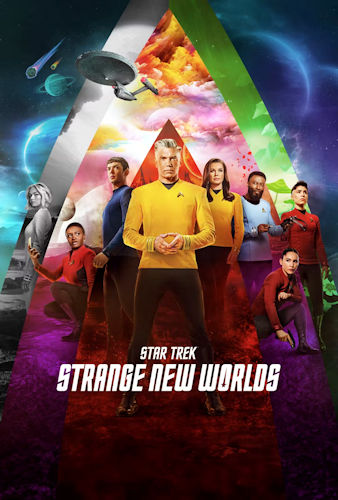
Watch Star Trek: Strange New Worlds on Prime Video
STAR TREK: STRANGE NEW WORLDS is based on the years Captain Christopher Pike manned the helm of the U.S.S. Enterprise. The series will follow Captain Pike, Officer Spock and Number One in the years before Captain Kirk boarded the U.S.S. Enterprise.
Watch Now!
Watch Fallout on Prime Video
Based on one of the greatest video games of all time, Fallout is the story of haves and have-nots in a world in which there’s almost nothing left to have.
Watch Now!
Watch The Expanse on Prime Video
Amidst political tension between Earth, Mars and the Belt, the single greatest conspiracy of all time must be unravelled.
Watch Now!As an Amazon Associate I earn from qualifying purchases.