✨ Byte-Sized Overview
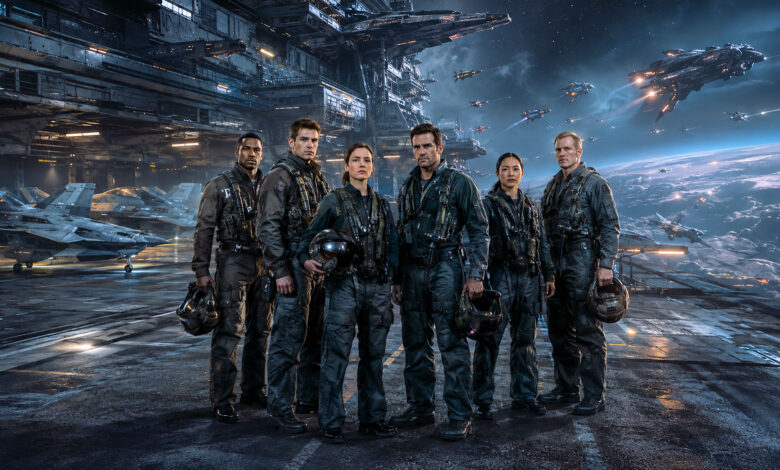
Humanity has finally begun colonising other worlds, which naturally means someone has already misplaced the first-contact manual and started an interstellar war. When an unknown alien species attacks Earth’s fledgling colonies, a group of inexperienced United States Marine Corps aviators is hurried through training and sent directly into a conflict nobody understands.
Space: Above and Beyond follows the 58th Squadron, better known as the Wildcards, as its members move between space combat, planetary assaults, rescue operations and the considerably harder task of surviving each other. They are fighter pilots when the mission calls for it, infantry when somebody points towards the ground, and expendable assets whenever a senior officer discovers a coloured pin and an empty patch on the strategic map.
Created by former The X-Files writers Glen Morgan and James Wong, the series combines military science fiction with stories about artificial intelligence, genetic engineering, prejudice, corporate secrecy and the psychological cost of war. It lasted for only one season, but its willingness to treat space warfare as frightening, exhausting and morally complicated earned it a loyal following that has never quite stopped demanding reinforcements.
📡 Transmission Details
- 📺 Show Title: Space: Above and Beyond
- 📅 Years: 1995–1996
- ✍️ Created By: Glen Morgan and James Wong
- 📡 Network: Fox
- 📚 Seasons: 1
- 🎞️ Episodes: 23
- ⭐ Starring: Morgan Weisser, Kristen Cloke, Rodney Rowland, Lanei Chapman, Joel de la Fuente and James Morrison
- 👥 Supporting Cast: Tucker Smallwood, David Jean Thomas, R. Lee Ermey and Doug Hutchison
- 🧬 Genre: Science Fiction, Military Science Fiction, Space Opera, Action, Adventure and Drama
- ✅ Status: Cancelled
🎯 Signal Strength
- IMDb: 7.8/10
- Rotten Tomatoes: 70% critics’ score; 93% audience score
- Skully’s take: Battlestar Galactica before Battlestar Galactica, with fighter pilots, corporate conspiracies and military commanders who regard “barely survived” as a perfectly acceptable mission outcome.
Ratings checked September 2026 and may change.
Space: Above and Beyond requires a little patience during its opening stretch. The feature-length pilot has an enormous amount of world-building to complete, while some early episodes alternate between ambitious military drama and the kind of earnest network television that practically arrives with its own inspirational trumpet solo.
Once the series settles into its identity, however, it becomes considerably stronger. The Wildcards stop feeling like characters selected to fill familiar squadron roles and begin behaving like people shaped by grief, fear, prejudice and combat. The war also grows more complicated as evidence emerges that humanity’s enemies may have reasons for attacking, and that powerful human institutions know far more than they have admitted.
The production is inevitably marked by its age. Some visual effects no longer convince, the alien fighters occasionally look as though they have wandered in from a particularly enthusiastic computer game, and several episodes carry more narrative ambition than the budget can comfortably support. Yet the model work, production design, combat photography and Shirley Walker’s music give the series an identity that survives those limitations.
Its cancellation is the largest warning. The final episode was designed to open a much bigger chapter and leaves several characters in immediate danger. This is not a neatly wrapped single-season story. It is a transmission cut off halfway through an urgent sentence, just as everyone listening realised the message was getting interesting.
📼 Spoiler Mode: Story Sync for Pub Chat
Spoilers ahead for the complete series, including the unresolved finale.
In 2063, humanity uses naturally occurring wormholes to reach potentially habitable planets. Nathan West plans to join a colonisation mission to Vesta with his girlfriend Kylen Celina, but he is removed from the programme shortly before departure. Desperate to follow her, he joins the United States Marine Corps and begins training as an aviator.
His fellow recruits include Shane Vansen, whose parents were killed during the war against rebellious artificial intelligences known as Silicates; Paul Wang, an ambitious and initially insecure cadet; Vanessa Damphousse, who combines scientific intelligence with growing combat instincts; and Cooper Hawkes, an artificially gestated human known as an In Vitro.
In Vitroes were created as rapidly matured soldiers during humanity’s war against the Silicates. Although legally free, they continue to face open prejudice and are commonly dismissed with derogatory names. Hawkes enters the Marines after rebelling against the narrow future society has prepared for him, but military service does not magically provide acceptance. His commanding officer, Lieutenant Colonel Tyrus Cassius McQueen, is also an In Vitro and understands exactly how much harder Hawkes will have to fight to be regarded as an individual rather than a manufactured weapon.
The Vesta colony is attacked by an unknown alien species before its settlers can establish themselves. A second colony ship is also destroyed, and the aliens, nicknamed Chigs by human forces, rapidly overwhelm Earth’s unprepared military. The surviving recruits form the 58th Squadron aboard the space carrier USS Saratoga under McQueen’s command.
The Wildcards fly Hammerhead fighters, undertake ground assaults and perform reconnaissance missions as humanity struggles to understand its enemy. Nathan remains driven by the possibility that Kylen survived the destruction of Vesta, while Shane carries the memory of her parents’ deaths into every encounter with the Silicates now assisting the Chigs.
Early missions expose divisions within the squadron. Hawkes has little reason to trust institutions created by naturally born humans, Wang’s confidence repeatedly collapses under pressure, and Nathan sometimes places his search for Kylen above his military responsibilities. Combat gradually turns these uneasy colleagues into a unit, although the process involves enough crashes, captures and near-fatal decisions to make ordinary workplace team-building appear merciful.
The conflict becomes more disturbing when the squadron discovers signs of corporate interference. Aero-Tech, the company behind the colony programme, knew that intelligent alien life existed before civilians were sent to Vesta. Its activities may have provoked the Chigs, meaning the war presented to the public as an unprovoked attack could have roots in concealed human actions.
Meanwhile, episodes such as “The Enemy” and “Choice or Chance” push the squadron beyond conventional combat. Chig weapons manipulate fear, captured Wildcards are forced into impossible decisions, and Silicate interrogators exploit human emotion with clinical cruelty. Wang’s torture and apparent betrayal become a lasting psychological wound rather than something forgotten before the next mission.
One of the series’ strongest arcs concerns an advanced enemy fighter whose pilot becomes known as Chiggy von Richthofen. The seemingly invincible craft destroys human squadrons and carries an English warning to abandon all hope. McQueen, already scarred by war and by society’s treatment of In Vitroes, takes the challenge personally. His eventual confrontation with the alien ace is both a gripping combat sequence and a character study of a soldier who has attached his entire sense of worth to battle.
Human forces eventually gain enough momentum to threaten the Chig homeworld. An alien representative arrives to negotiate peace and reveals that an Aero-Tech probe entered a place sacred to the Chigs before the war. The disclosure confirms that corporate secrecy helped create the catastrophe, but the negotiations collapse when Aero-Tech refuses to accept responsibility.
The finale sends the Wildcards on a mission to recover prisoners, including Kylen. The operation succeeds only partially and at devastating cost. Wang and Vansen appear to be killed, Damphousse is critically wounded, and Hawkes and Nathan are left facing an uncertain future. McQueen is already recovering from severe injuries, leaving the surviving members of the 58th scattered just as the wider truth about the war begins to emerge.
Then the series ends. No rescue beacon, no second season and no helpful concluding caption. Fox apparently decided the most authentic way to portray the uncertainty of war was to cancel the programme while half the squadron was still missing.
🧠 Vibe Check
- ✈️ Space combat presented with the tension and language of twentieth-century military aviation
- 🪖 Young pilots becoming exhausted veterans far sooner than anyone expected
- 🤖 Artificial intelligences who treat murder as a game of chance
- 🧬 Engineered humans fighting both an alien enemy and human prejudice
- 👽 A mysterious opponent whose motives are slowly revealed
- 🏢 Corporate decisions causing disasters that soldiers are ordered to resolve
Perfect if you like: Battlestar Galactica for morally complicated wartime science fiction, Babylon 5 for a developing interstellar conflict, The X-Files for conspiracy and institutional secrecy, or Band of Brothers with considerably more vacuum outside the windows.
Expect a heavily serialised military drama mixed with individual mission stories. The series becomes darker and more confident as it progresses, but it does not provide a resolved ending. Viewers allergic to cliffhangers should keep emergency medication within reach.
🚀 Why It’s a Sci-Fi Icon
Space: Above and Beyond lasted for one season, but many of its ideas anticipated the direction television science fiction would take during the following decade.
- 🪖 It takes military service seriously: The Wildcards do not simply exchange witty remarks while firing futuristic weapons. Missions leave physical and psychological damage, victories carry losses, and obedience does not protect anyone from guilt.
- 🧬 The In Vitro storyline gives the war another front: Hawkes and McQueen are defending a society that still treats them as manufactured property. Their experiences allow the series to explore prejudice, identity and the uncomfortable difference between being legally free and genuinely accepted.
- 🤖 Its artificial intelligences are genuinely unsettling: The Silicates do not seek approval or redemption. Freed from their original programming, they embrace probability, cruelty and the instruction to “take a chance”, making their behaviour difficult for humans to predict.
- 👽 The enemy develops beyond a faceless threat: The Chigs initially function as an unknowable military opponent, but later discoveries suggest that the war began through fear, trespass and deliberate concealment. Humanity may not be the innocent party described in recruitment speeches.
- 🏢 Corporate power sits behind the battlefield: Aero-Tech sends civilians towards danger, withholds information and avoids responsibility while military personnel absorb the consequences. Thirty years later, this portion of the story has not exactly become quaint.
- 🎬 It aims far beyond its television budget: Large fleet engagements, alien planets, planetary invasions and carrier operations give the series an impressive scale. The effects vary, but the ambition is always visible.
- 💥 Consequences are allowed to remain consequences: Characters break under interrogation, carry trauma between episodes and make decisions shaped by earlier failures. Reset buttons are apparently one technology humanity failed to invent by 2063.
🔦 Deep Dive Highlights
- 🃏 The 58th Squadron: The Wildcards begin as recruits connected more by circumstance than affection. Their development into a convincing military family gives the series its emotional structure and makes the finale particularly brutal.
- ♠️ Cooper Hawkes: Angry, impulsive and suspicious of authority, Hawkes could easily have become a familiar rebellious-soldier stereotype. His status as an In Vitro instead makes his defiance understandable and his gradual loyalty genuinely moving.
- 🦅 T. C. McQueen: James Morrison gives the series its strongest performance. McQueen is disciplined, intimidating and deeply protective of his pilots, while carrying years of discrimination and the belief that only military achievement can prove his humanity.
- 🤖 The Silicates: Their artificial eyes and calm delivery make them visually simple but unnerving antagonists. They are humanity’s own creation, freed from restraint and now willing to work with an alien enemy against their former masters.
- 👽 The Chigs: Concealing the aliens inside environmental armour keeps them mysterious for much of the season. Later revelations complicate the assumption that they attacked without cause and suggest a much broader story the series never had time to explore.
- 🚀 The USS Saratoga: More working carrier than gleaming starship, the Saratoga provides the series with a convincing operational centre. Pilots return from missions to briefings, repairs, medical treatment and orders sending them straight back out again.
- 🎯 “The Angriest Angel”: McQueen’s confrontation with the enemy ace distils the show’s military action, character drama and sense of sacrifice into one of its most memorable episodes.
- 🕯️ “Who Monitors the Birds?”: Hawkes’ solitary mission explores the conditioning of In Vitroes and the despair beneath his aggression. It demonstrates how effective the series can be when spectacle gives way to character.
- ⚰️ The final mission: Bold, emotional and deeply frustrating, the finale refuses to protect major characters simply because the next season would need them. Unfortunately, the next season never arrived to deal with the wreckage.
Skully's Score
Skully's independent editorial rating
An ambitious, unusually thoughtful military science-fiction drama that grew stronger throughout its single season. Its effects and early episodes can be uneven, but its treatment of war, prejudice and institutional failure gives it lasting weight, while the unresolved finale remains one of television science fiction's most frustrating lost opportunities.
What works
- James Morrison gives the series a commanding emotional centre
- The Wildcards develop into a convincing and likeable military unit
- Its treatment of artificial intelligence and engineered humans adds depth to the war story
- Later episodes combine action, atmosphere and moral complexity extremely well
What may not
- The opening episodes occasionally struggle to balance exposition and character development
- Some visual effects and military technology now appear dated
- The tone can shift awkwardly between network adventure and bleak war drama
- Cancellation leaves the story and several character fates unresolved
Recommended Sci-Fi TV Products
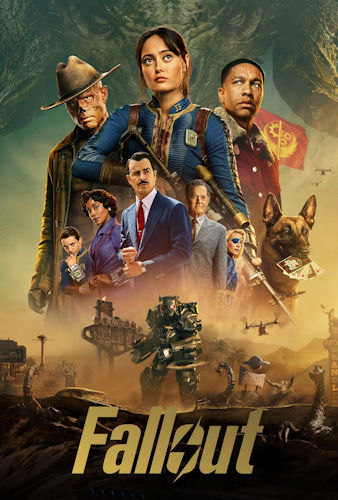
Watch Fallout on Prime Video
Based on one of the greatest video games of all time, Fallout is the story of haves and have-nots in a world in which there’s almost nothing left to have.
Watch Now!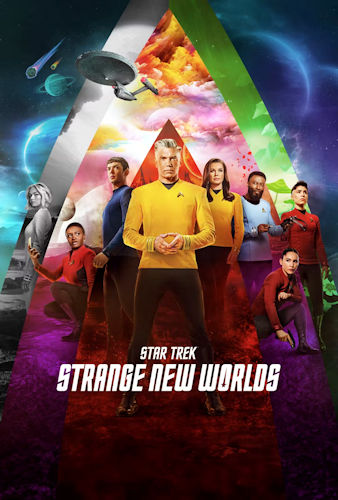
Watch Star Trek: Strange New Worlds on Prime Video
STAR TREK: STRANGE NEW WORLDS is based on the years Captain Christopher Pike manned the helm of the U.S.S. Enterprise. The series will follow Captain Pike, Officer Spock and Number One in the years before Captain Kirk boarded the U.S.S. Enterprise.
Watch Now!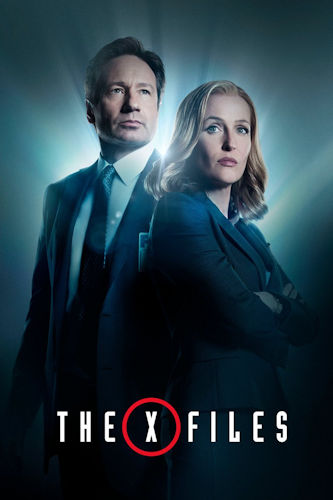
Watch The X-Files on Prime Video
A young FBI agent is assigned watchdog duty over a fellow agent, but finds herself drawn into his investigations of paranormal and unexplained phenomena.
Watch Now!As an Amazon Associate I earn from qualifying purchases.