✨ Byte-Sized Overview
Some detectives bring notebooks to a crime scene. Frank Black brings an unnerving ability to see what the killer saw, which is useful professionally and absolutely dreadful for maintaining a healthy work-life balance.
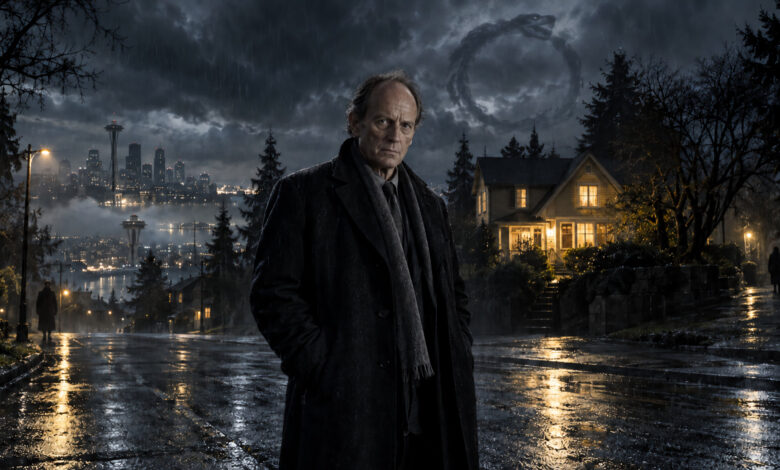
Created by The X-Files mastermind Chris Carter, Millennium follows former FBI profiler Frank Black as he returns to Seattle with his wife Catherine and their daughter Jordan. Frank hopes the move will protect his family from the darkness he encountered in his work, but he soon begins consulting for the Millennium Group, a private organisation investigating violent crimes as the year 2000 approaches. The Group possesses formidable resources, unusual access and a worrying habit of answering straightforward questions with quotations from scripture.
Frank describes his insight into murderers as an ability to place himself inside their minds. The series initially leaves open whether this is extraordinary intuition or something genuinely supernatural, illustrating his visions through flashes of disturbing imagery. Lance Henriksen plays him with remarkable restraint. Frank has witnessed humanity at its worst without losing his compassion, although every investigation threatens the sanctuary he has created for his family.
Across three seasons, Millennium evolves from an exceptionally dark serial-killer drama into a supernatural conspiracy thriller concerned with prophecy, secret societies and an approaching apocalypse. Those creative changes produce some uneven continuity, but also several daring and deeply memorable episodes. Fox cancelled the series in 1999 without a complete resolution, although Frank later returned in an episode of The X-Files intended to provide a form of closure.
🎬 Transmission Details
- Show Title: Millennium
- Years: 1996–1999
- Created By: Chris Carter
- Network: Fox
- Seasons: 3
- Episodes: 67
- Starring: Lance Henriksen, Megan Gallagher, Klea Scott and Brittany Tiplady
- Supporting Cast: Terry O’Quinn, Bill Smitrovich, Kristen Cloke, Stephen J. Lang and Sarah-Jane Redmond
- Genre: Science fiction, psychological thriller, crime drama, supernatural horror and mystery
- Status: Cancelled
🎯 Signal Strength
- IMDb: 8.0/10
- Rotten Tomatoes: 64% critics’ score and 88% audience score for Season 1
- Skully’s take: Bleak, strange and powered by Lance Henriksen’s magnificent thousand-yard stare. Not every prophecy reaches fulfilment, but the journey towards doomsday is frequently exceptional.
Ratings checked 6 September 2026 and may change.
📼 Spoiler Mode: Story Sync for Pub Chat
Major spoilers follow for all three seasons of Millennium and the later crossover episode of The X-Files.
Former FBI profiler Frank Black moves his family to Seattle after receiving threatening Polaroid photographs from an unknown stalker. He creates a protective refuge by painting their new home bright yellow, but continues investigating violent crimes as a consultant to the Millennium Group. Frank works closely with Group member Peter Watts and Seattle police lieutenant Bob Bletcher, using his disturbing visions to understand murderers and anticipate their actions.
The first season largely follows individual investigations involving serial killers, religious fanatics and predators. Frank repeatedly encounters crimes suggesting that social order is deteriorating as the millennium approaches. The Group presents itself as a network of former law-enforcement specialists, yet possesses information and influence beyond those of an ordinary consultancy. Its members appear particularly interested in Frank’s abilities.
Catherine works as a clinical social worker and sometimes contributes to cases, but becomes increasingly concerned about the psychological price Frank pays. Their daughter Jordan exhibits unusual sensitivity and may have inherited some form of Frank’s gift. The family’s yellow house remains his symbol of goodness, but the violence he investigates steadily breaches its imagined boundaries.
Among the recurring threats is Lucy Butler, a seductive figure associated with several identities and apparently capable of changing form. Frank comes to believe she is not merely human but a manifestation of demonic evil. Meanwhile, the Polaroid Stalker continues observing the Black family. In the first-season finale, the stalker kills Bob Bletcher inside Frank’s home and abducts Catherine. Frank rescues her, but his sanctuary has been violated and the family cannot simply return to its former life.
At the beginning of season two, Frank pursues and kills the stalker. His actions and emotional withdrawal contribute to his separation from Catherine. As they struggle to rebuild their relationship, the Millennium Group’s beliefs move to the centre of the series. Frank discovers two internal factions: the Roosters believe the approaching millennium will bring a biblical apocalypse, while the Owls expect a secular catastrophe caused by human action. Both sides manipulate events in preparation for what they believe is coming.
Frank begins working with Group forensic psychologist Lara Means, who experiences visions of angels. She becomes increasingly disturbed by the Group’s secrets and eventually suffers a psychological collapse. Computer specialist Brian Roedecker also assists Frank, bringing rare levity to proceedings before being murdered as the conspiracy closes around them.
The Group subjects Frank to a disturbing initiation and reveals its connections to ancient Christian history. In “The Hand of Saint Sebastian”, Frank and Peter investigate a sacred relic and evidence that the Group has existed in different forms for centuries. Lucy Butler reappears in several guises, confirming that the evil Frank confronts cannot always be explained through criminal psychology.
As New Year’s Eve 1998 approaches, the Group prepares for a predicted outbreak of Marburg virus. Peter provides Frank with a vaccine but refuses to explain the full plan. Catherine is exposed while treating an infected family and realises she may carry the virus. She leaves Frank and Jordan sleeping in a remote cabin and walks into the woods, sacrificing herself rather than risk infecting them. Frank awakens to understand that Catherine has died as the outbreak begins.
Season three reveals that the epidemic was contained rather than becoming a global apocalypse. Grieving and furious, Frank moves to Virginia with Jordan, rejoins the FBI and dedicates himself to exposing the Millennium Group. He is partnered with young agent Emma Hollis, whose scepticism gradually erodes as she witnesses cases involving inexplicable phenomena and the Group’s interference.
Frank continues to encounter Peter Watts, who insists that the Group’s methods serve a necessary purpose. Their relationship becomes increasingly adversarial, although Peter sometimes protects Frank and Jordan. Frank also wrestles with Catherine’s absence, most directly when “The Sound of Snow” leads him to an experience that allows him to confront his grief and accept that she will not return.
Emma’s family circumstances make her vulnerable to the Group. Her father suffers from Alzheimer’s disease, and the organisation suggests it possesses knowledge or treatment that could help him. Despite Frank’s warnings, she becomes increasingly willing to cooperate with Peter.
During the two-part finale, Frank and Emma investigate murders connected to the Group and the recovery of a fragment of the True Cross. Peter attempts to help Frank but is apparently attacked and left for dead. Emma accepts membership of the Millennium Group in return for assistance with her father. Feeling betrayed and convinced that Jordan remains in danger, Frank removes his daughter from school and flees Washington. The series ends there, without revealing where they go or resolving the Group’s long-term plans.
Frank returns in “Millennium”, a seventh-season episode of The X-Files set during the final days of 1999. He has voluntarily entered a psychiatric institution and broken with the Group. Mulder and Scully investigate former Group members who arranged for their bodies to be resurrected as zombies, believing that four undead representatives could trigger the apocalypse at the millennium.
Frank helps Mulder escape from the zombies and assists in destroying them before midnight. The world survives the arrival of the year 2000, and Frank reunites with Jordan to watch the New Year celebrations. It offers him a gentler final moment, although the larger fate of the Millennium Group and several characters from the original series remains unresolved.
🧠 Vibe Check
- 🌧️ Relentlessly atmospheric: Rain, darkness and empty industrial landscapes turn Vancouver’s version of Seattle into a place where daylight appears to have been cancelled for budgetary reasons.
- 🧠 Psychologically disturbing: Frank’s visions place the viewer briefly inside violent minds without making the killers glamorous or intellectually heroic.
- 📖 Heavy with religious symbolism: Biblical quotations, sacred relics, angels, demons and apocalyptic prophecy become increasingly prominent as the series progresses.
- 🏠 Emotionally grounded: The Black family and their yellow house provide a vital counterweight to the horror, giving Frank something tangible to protect.
- 🕵️ Procedural at first: Many early episodes operate as self-contained criminal investigations, although the Millennium Group gradually becomes the programme’s central mystery.
- 🔄 Creatively volatile: Each season has a distinct identity because control passed between different production teams. That produces fascinating reinvention alongside some conspicuous contradictions.
- 🕯️ Occasionally experimental: The series can shift from brutal horror to meditative tragedy, biblical allegory, black comedy or an episode built around four demons reminiscing in a coffee shop.
Perfect if you like: The X-Files for supernatural investigations and shadowy conspiracies; Hannibal for psychologically intense crime stories presented with visual elegance; and True Detective for damaged investigators pursuing evil through landscapes steeped in dread.
Worth knowing before you start: Millennium contains serial murder, sexual violence, child endangerment, suicide, disease and disturbing crime-scene imagery. Its sombre pace and moral seriousness are deliberate, particularly during the first season. The mythology also changes direction between seasons, so viewers expecting every symbol and conspiracy to join into one immaculate master plan may find the apocalypse has mislaid some paperwork.
The programme stands alone, despite sharing a universe with The X-Files. For the fullest ending, watch all three seasons of Millennium and then “Millennium”, episode four of The X-Files season seven. The crossover provides closure for Frank and Jordan, but it does not resolve every thread left by the cancellation.
🚀 Why It’s a Sci-Fi Icon
Millennium never achieved the mainstream reach of The X-Files, but its ambitions, visual confidence and unusual central performance have given it an enduring reputation. Calling it an icon does not mean pretending its mythology remained consistent; it means recognising how rarely network television has been permitted to become this bleak, thoughtful and peculiar.
- 🧠 It created an unusually compassionate profiler. Frank Black understands violent minds without becoming fascinated by their celebrity. His defining quality is empathy, making him markedly different from the abrasive or emotionally detached investigators who followed.
- 🌒 It brought cinematic darkness to network television. The photography, production design and sound gave weekly episodes the oppressive texture of a psychological horror film. Its strongest images remain striking decades later.
- 📅 It captured pre-millennial anxiety at precisely the right moment. The approaching year 2000 becomes a focus for fears about social collapse, religious prophecy, disease and institutional power. The actual millennium proved rather less demonic, unless one counts the price of printer ink.
- 🧩 It refused to remain a conventional crime procedural. The second season transformed the programme into a sweeping supernatural and apocalyptic drama, while experimental episodes tested how much tonal variation its world could sustain.
- 🎭 It gave Lance Henriksen a defining television role. His quiet, weathered performance carries enormous emotional weight without relying upon speeches or flamboyant displays. Frank’s exhaustion, love and moral determination are visible before he says a word.
- 🕯️ It influenced the shape of later prestige horror. Its mixture of criminal psychology, family drama, serialised mythology and visual dread anticipated elements later seen in programmes such as Hannibal, True Detective and Evil, even though those series developed their own distinct identities.
🔦 Deep Dive Highlights
- 👁️ Frank Black: Frank’s visions are presented as flashes of emotional and symbolic insight rather than a neatly defined superpower. The uncertainty allows him to remain both an exceptional investigator and a man frightened by what his mind contains.
- 🏡 The yellow house: Bright, warm and deliberately ordinary, the family home represents Frank’s attempt to build goodness in defiance of everything he has seen. Its vulnerability supplies the series with one of its most effective recurring images.
- ❤️ Catherine Black: Megan Gallagher gives Catherine a moral and professional identity beyond being the worried investigator’s wife. Her work with victims frequently provides a humane perspective that the more procedural characters overlook.
- ♟️ Peter Watts: Terry O’Quinn makes Peter reassuring, secretive and quietly threatening. His loyalty to Frank repeatedly collides with his devotion to an organisation whose intentions he rarely explains completely.
- 👧 Jordan Black: Brittany Tiplady brings warmth to a series in desperate need of it. Jordan’s sensitivity also raises the unsettling possibility that Frank’s ability is inherited and that his daughter may one day share his burden.
- 🦉 The Owls and Roosters: The Millennium Group’s factions embody competing visions of apocalypse: one religious, the other secular. Their conflict expands the conspiracy while demonstrating how easily belief can justify manipulation.
- 🎼 Mark Snow’s music: The mournful violin-led theme immediately separates the programme from a conventional police thriller. Snow’s score creates sadness as effectively as suspense, reinforcing the sense that Frank is mourning the world even while trying to save it.
- 😈 The experimental episodes: Stories such as “Jose Chung’s Doomsday Defense”, “Somehow, Satan Got Behind Me” and “The Curse of Frank Black” show that the series could be funny, reflective and formally adventurous without abandoning its central concerns.
Skully's independent editorial rating A bold, brooding and frequently brilliant collision of criminal profiling, supernatural horror and end-of-the-century dread, anchored by Lance Henriksen’s quietly exceptional performance.Skully's Score
What works
What may not
Recommended Sci-Fi TV Products

Watch The Walking Dead on Prime Video
County Sheriff Rick Grimes, his wife, son and a small eclectic group try to survive constant attacks from zombies and other threats.
Watch Now!
Watch The X-Files on Prime Video
A young FBI agent is assigned watchdog duty over a fellow agent, but finds herself drawn into his investigations of paranormal and unexplained phenomena.
Watch Now!
Watch The Expanse on Prime Video
Amidst political tension between Earth, Mars and the Belt, the single greatest conspiracy of all time must be unravelled.
Watch Now!As an Amazon Associate I earn from qualifying purchases.