✨ Byte-Sized Overview
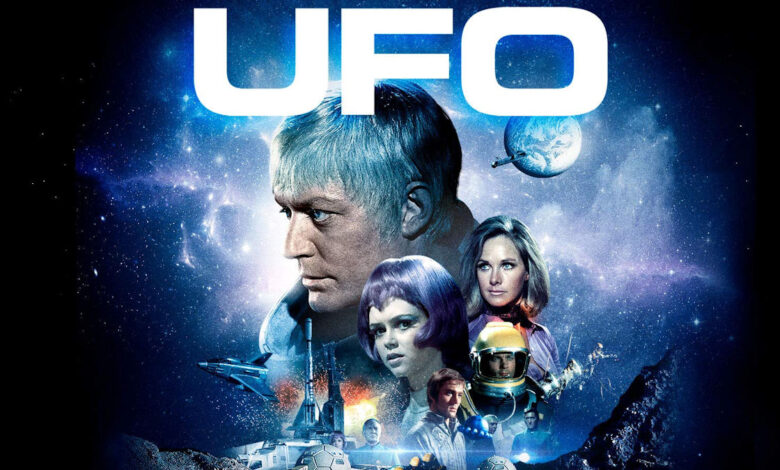
It is 1980, flying saucers are real and hostile aliens are visiting Earth to abduct humans and harvest their organs. Fortunately, the governments of the world have created SHADO, a secret military organisation equipped with a lunar base, space interceptors, submarines, tracked vehicles and enough silver clothing to make stealth considerably harder than necessary.
UFO follows Commander Ed Straker, the coldly efficient head of SHADO, as he directs a layered defence system against alien incursions. The organisation operates beneath a film studio, allowing unusual vehicles, secret personnel and suspicious quantities of futuristic equipment to move around without attracting attention. Straker’s public role as studio executive also gives him an excellent excuse for looking permanently exhausted by other people.
Created by Gerry Anderson, Sylvia Anderson and Reg Hill, UFO was the Andersons’ first fully live-action television series. Its colourful retro-futurism and spectacular miniature effects suggest adventure, but the stories are often unexpectedly bleak. Missions fail, innocent people die, secrecy destroys relationships and Straker repeatedly sacrifices his personal happiness to protect an unsuspecting world.
📡 Transmission Details
- 📺 Show Title: UFO
- 📅 Years: 1970–1971
- ✍️ Created By: Gerry Anderson, Sylvia Anderson and Reg Hill
- 📡 Network: ITV
- 📚 Seasons: 1
- 🎞️ Episodes: 26
- ⭐ Starring: Ed Bishop, Michael Billington, George Sewell, Gabrielle Drake, Wanda Ventham, Dolores Mantez and Grant Taylor
- 👥 Supporting Cast: Vladek Sheybal, Keith Alexander, Antonia Ellis, Ayshea Brough, Peter Gordeno and Harry Baird
- 🧬 Genre: Science Fiction, Alien Invasion, Action, Adventure and Drama
- ✅ Status: Ended
🎯 Signal Strength
- IMDb: 7.9/10
- Rotten Tomatoes: 88% audience score
- Skully’s take: Secret lunar interceptors, underwater fighter aircraft and alien organ thieves. The future may not have turned out exactly as predicted, but we have unquestionably underachieved in the silver-jumpsuit department.
Ratings checked September 2026 and may change.
UFO remains one of the most distinctive British science-fiction programmes of its era. Derek Meddings’ miniature effects give the interceptions and vehicle sequences a physical presence that still works, while Barry Gray’s urgent music transforms every launch procedure into an event. The designs of Moonbase, Skydiver, the SHADO Mobiles and Straker’s futuristic car have become as memorable as the characters.
The programme can also be stranger and darker than its appearance suggests. The aliens do not merely want to conquer Earth or acquire its resources. They are abducting people to obtain replacement organs for their dying bodies. Their motives combine desperation with horrifying indifference, giving SHADO an enemy whose actions are understandable in principle but monstrous in practice.
UFO is predominantly episodic, and the order in which it was transmitted varied between ITV regions. Character appearances can therefore feel inconsistent, particularly after production moved studios and several actors became unavailable. Some episodes are tense and psychologically ambitious; others rely on romantic misunderstandings, convenient amnesia or security procedures that would cause an information-security consultant to quietly close the door and begin writing a very long report.
The best episodes justify the series’ reputation. “A Question of Priorities” is unusually brutal, “Confetti Check A-O.K.” reveals the personal cost of Straker’s work, “Sub-Smash” builds effective claustrophobic suspense, and “Timelash” delivers one of the programme’s most inventive confrontations. There is no conclusive finale, but the episodic structure means the ending feels less damaging than the cliffhangers attached to many later cancellations.
📼 Spoiler Mode: Story Sync for Pub Chat
Spoilers ahead for the complete series.
After evidence of hostile extraterrestrial activity becomes impossible for selected governments to ignore, they establish the Supreme Headquarters Alien Defence Organisation. SHADO is commanded by former United States Air Force colonel and astronaut Ed Straker, who operates from a subterranean headquarters beneath Harlington-Straker Studios in England.
The film studio provides a convincing cover for unusual activity, but maintaining SHADO’s secrecy requires extensive surveillance, memory-altering drugs and a willingness to deceive civilians. Employees cannot discuss their work with families or friends, and unexplained absences place enormous pressure on their personal lives.
SHADO’s first line of defence is the Space Intruder Detector, which monitors incoming alien craft. Moonbase launches Interceptors carrying nuclear missiles, while Skydiver patrols Earth’s oceans and can release the aircraft Sky One to attack UFOs entering the atmosphere. Mobile ground teams pursue anything that survives those layers.
In “Identified”, SHADO captures an injured alien following a UFO incident. Medical examination reveals that its body contains transplanted human organs, confirming that the visitors have been abducting people to prolong their own lives. Their green appearance comes from the liquid inside their suits rather than their natural skin colour.
Test pilot Paul Foster encounters a UFO during “Exposed” and refuses to accept the official explanation for what he saw. His investigation brings him into conflict with SHADO before Straker decides that recruiting him is safer than attempting to discredit him permanently. Foster becomes one of the organisation’s principal operatives.
The aliens rarely launch straightforward attacks. They use hypnosis, drugs, mind control and human agents to penetrate SHADO’s defences. “Flight Path” forces a compromised operative to assist an attack on Moonbase, while “Kill Straker!” turns Foster and another officer against their commander.
“The Cat with Ten Lives” suggests that the apparent alien bodies may themselves be controlled hosts. A domestic cat becomes the instrument of an intelligence capable of influencing a SHADO pilot, raising the possibility that the true enemy has never been physically encountered at all.
SHADO’s secrecy repeatedly creates moral conflicts. In “A Question of Priorities”, Straker’s young son is critically injured in a road accident. A SHADO aircraft carrying urgent medical supplies is diverted when an alien appears to be attempting contact. Straker puts the potential security breakthrough before his family, but the interception fails and his son dies before the treatment arrives.
The episode captures the central tragedy of Straker’s life. He does not make the decision carelessly, nor is he rewarded for placing humanity first. His responsibility simply demands a sacrifice that nobody outside SHADO can understand.
“Confetti Check A-O.K.” looks back at the creation of SHADO and the collapse of Straker’s marriage. His work requires secrecy, unexplained disappearances and absolute commitment. His wife interprets his behaviour as neglect and possible infidelity, leaving Straker unable to defend himself without revealing information he is sworn to protect.
Other missions place SHADO personnel under direct psychological pressure. Foster is abducted and forced to breathe the aliens’ oxygenated liquid in “Ordeal”. Straker becomes trapped aboard a sinking Skydiver in “Sub-Smash”, where his usual emotional control begins to fracture as the remaining air disappears.
Several stories question whether SHADO’s relentless security measures can be justified. “Court Martial” places Foster on trial after evidence suggests he has leaked classified information. “The Square Triangle” leaves the organisation aware of a planned murder but unable to prosecute those involved without exposing its own existence.
In “Reflections in the Water”, SHADO discovers an underwater alien installation containing replicas of its personnel and headquarters. The scale of the operation suggests preparation for a much larger assault, but the threat is stopped without revealing the aliens’ wider strategy.
“Timelash” finds SHADO headquarters and the surrounding studio trapped within a field that has effectively frozen time. Straker and Colonel Virginia Lake remain mobile and must fight an alien-controlled human moving at extraordinary speed. The episode turns familiar locations into an eerie, abandoned battlefield.
“Mindbender” uses an alien rock to generate hallucinations tailored to its victims. Straker experiences a reality in which SHADO is merely a television production, collapsing the boundary between the secret organisation and the studio hiding it.
The final produced episode, “The Long Sleep”, begins when a woman awakens after ten years in a coma. Her memories reveal a youthful encounter with two men and an alien device containing a devastating explosive. SHADO must reconstruct events before the hidden bomb can be activated.
The series never identifies the aliens properly or resolves the conflict. SHADO continues intercepting incursions, protecting a world that cannot be told how close it repeatedly comes to disaster. Straker remains at his desk, the aliens remain out there, and Moonbase continues proving that purple wigs are apparently compatible with pressure seals.
🧠 Vibe Check
- 🛸 Hostile flying saucers arriving with distinctly unpleasant medical requirements
- 🌕 Lunar interceptors launching from a spectacular secret Moonbase
- 🌊 A submarine carrying its own detachable fighter aircraft
- 🎬 Global defence operations hidden beneath a British film studio
- 🧠 Hypnosis, possession and psychological manipulation
- 💔 Personal relationships destroyed by secrecy and duty
Perfect if you like: Thunderbirds with a darker adult edge, The X-Files for covert investigations into alien activity, Captain Scarlet for an unknowable enemy using human agents, or Space: 1999 for spectacular Gerry Anderson hardware and gloriously confident retro-futurism.
Do not expect a heavily serialised invasion story. Most episodes present an individual alien incident or security crisis, with recurring characters and technology providing continuity. Transmission order varied considerably, so some personnel appear to depart and then return without anybody feeling obliged to explain themselves.
🚀 Why It’s a Sci-Fi Icon
UFO brought the visual imagination of Gerry and Sylvia Anderson into live-action television while preserving the vehicles, miniature effects and launch sequences that had made their earlier productions so distinctive.
- 🎬 It was the Andersons’ first fully live-action television series: The transition from puppets to actors allowed the programme to pursue more adult stories about marriage, responsibility, trauma and moral compromise.
- 🛸 The alien threat is genuinely disturbing: Organ harvesting gives the visitors a specific and horrifying purpose. They are not invading for territory or delivering speeches about galactic domination; they need human bodies to keep themselves alive.
- 🚀 Its technology is unforgettable: Moonbase Interceptors, SHADO Mobiles, Skydiver and Sky One each perform a clear part of Earth’s defence. Their launch and deployment sequences make the organisation feel operational rather than decorative.
- 🌈 Its future has a unique visual identity: Silver clothing, purple wigs, gull-wing cars and colourful control rooms create a version of 1980 that never existed but remains instantly recognisable.
- 💔 Duty carries a personal cost: Straker’s decisions protect millions of people who will never know his name, but they destroy his marriage and contribute to the death of his son. Heroism is presented as responsibility rather than reward.
- 🕵️ SHADO is morally uncomfortable: The organisation protects Earth, but it also monitors its personnel, manipulates memories and suppresses evidence. Its secrecy is necessary, yet the methods used to preserve it are rarely harmless.
- 🎼 Barry Gray’s music elevates everything: The theme and action cues give launches, interceptions and control-room procedures tremendous urgency. Even routine readiness checks sound as though civilisation has approximately ninety seconds remaining.
- 🌑 The bright surface conceals dark stories: UFO looks colourful and optimistic, but its strongest episodes deal with death, paranoia, psychological collapse and impossible choices.
🔦 Deep Dive Highlights
- 🧊 Commander Ed Straker: Ed Bishop gives Straker an icy authority that initially appears almost inhuman. Gradually, the series reveals the sacrifice beneath that control and the emotional damage required to continue making impossible decisions.
- ✈️ Colonel Paul Foster: Michael Billington provides a more impulsive contrast to Straker. Foster enters SHADO as an outsider and frequently questions its procedures, while still becoming one of its most dependable operatives.
- 🎖️ Colonel Alec Freeman: George Sewell brings warmth and practicality to SHADO’s senior command. Freeman is one of the few people capable of challenging Straker without immediately discovering an urgent reassignment to the lunar surface.
- 🌕 Lieutenant Gay Ellis: Gabrielle Drake gives Moonbase a calm and capable commander. The character’s purple wig became one of the programme’s defining images, regardless of whether lunar regulations ever supplied a convincing operational justification.
- 🛰️ Colonel Virginia Lake: Wanda Ventham joins the later episodes as an intelligent senior officer who works effectively beside Straker. Her role becomes particularly important during the surreal crisis in “Timelash”.
- 🛸 The aliens: Their green faces, liquid-filled helmets and opaque eyes create an unsettling appearance. By withholding their name, culture and complete objectives, the series preserves a sense that SHADO understands only fragments of the threat.
- 🌊 Skydiver: Part submarine and part aircraft carrier, Skydiver is an absurdly ambitious design made convincing through excellent miniature work. Sky One’s underwater launch remains one of the series’ signature sequences.
- 🚀 Moonbase: The lunar installation provides early warning and the first active defence against incoming UFOs. Its distinctive control room, interceptors and costumes embody the programme’s optimistic visual futurism.
- 💔 “A Question of Priorities”: Straker must choose between a possible alien defection and the medical flight needed to save his son. The outcome demonstrates how unusually unforgiving the series can be.
- 🌊 “Sub-Smash”: A damaged Skydiver sinks after an alien attack, trapping its crew underwater. The confined setting and dwindling air produce one of UFO’s most effective suspense stories.
- ⏱️ “Timelash”: Frozen time turns the studio complex into an abandoned landscape while Straker and Lake battle an enemy moving beyond normal human speed. It is visually inventive, eerie and wonderfully strange.
- 🧠 “Mindbender”: Hallucinations caused by alien technology allow the programme to acknowledge its own production. Straker briefly sees SHADO as nothing more than actors and sets, which must be awkward when the sets are directly above his office.
Skully's Score
Skully's independent editorial rating
A visually extraordinary and unexpectedly dark alien-invasion series that carried the Andersons' flair for futuristic machinery into live-action television. Its episodic storytelling and inconsistent transmission order limit the wider narrative, but its design, miniature effects and morally difficult stories have aged remarkably well.
What works
- Ed Bishop gives Commander Straker authority, intelligence and hidden vulnerability
- The miniature effects and SHADO vehicles remain enormously impressive
- The alien organ-harvesting premise gives the threat a disturbing purpose
- Its strongest episodes allow duty and secrecy to carry genuine consequences
What may not
- The series never develops the alien conflict into a conclusive wider story
- Character appearances can feel inconsistent because of production and transmission changes
- Some attitudes, costumes and romantic plots are firmly rooted in their era
- Episode quality varies between powerful psychological drama and conventional adventure
Recommended Sci-Fi TV Products
Watch The Walking Dead on Prime Video
County Sheriff Rick Grimes, his wife, son and a small eclectic group try to survive constant attacks from zombies and other threats.
Watch Now!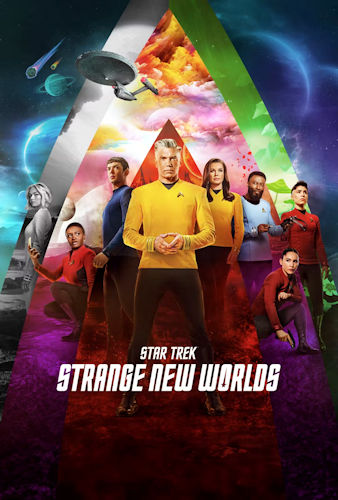
Watch Star Trek: Strange New Worlds on Prime Video
STAR TREK: STRANGE NEW WORLDS is based on the years Captain Christopher Pike manned the helm of the U.S.S. Enterprise. The series will follow Captain Pike, Officer Spock and Number One in the years before Captain Kirk boarded the U.S.S. Enterprise.
Watch Now!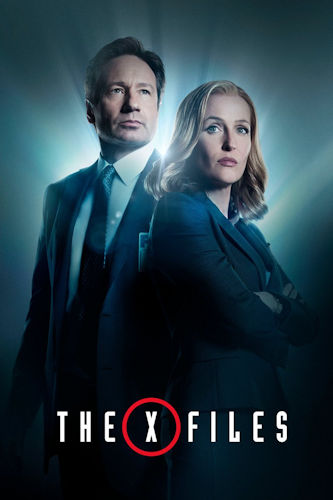
Watch The X-Files on Prime Video
A young FBI agent is assigned watchdog duty over a fellow agent, but finds herself drawn into his investigations of paranormal and unexplained phenomena.
Watch Now!As an Amazon Associate I earn from qualifying purchases.