✨ Byte-Sized Overview
Murderbot has secretly hacked the control system that forces it to obey humans. It could use its freedom to conquer the galaxy, lead a machine uprising or explore the meaning of consciousness. Instead, it mainly wants everyone to stop making eye contact so it can finish watching its programmes.
Based on Martha Wells’s The Murderbot Diaries, Murderbot follows a human-machine Security Unit assigned to protect a scientific expedition on a distant planet. The construct has disabled its governor module and gained autonomy, but revealing that freedom would result in destruction or memory erasure. It therefore continues pretending to be a compliant corporate asset while privately naming itself Murderbot, consuming vast quantities of entertainment and making increasingly irritated observations about its clients.
Those clients are the PreservationAux survey team, a cooperative collection of scientists led by Dr Ayda Mensah. Their open affection, communal decision-making and discomfort with owning a sentient being completely bewilder Murderbot. When equipment failures and missing information indicate that their expedition may have been deliberately endangered, it must protect a group of vulnerable humans while preventing them from discovering just how independently it can act.
Alexander Skarsgård plays the title character with superb physical awkwardness and a beautifully dry internal monologue. The series combines planetary mystery, corporate conspiracy and bursts of action with a thoughtful comedy about bodily autonomy, social anxiety and reluctant attachment. Its first season tells a satisfying story while leaving Murderbot’s future open, and Apple has officially renewed the programme for a second season.
🎬 Transmission Details
- Show Title: Murderbot
- Years: 2025–present
- Created By: Chris Weitz and Paul Weitz
- Network: Apple TV+
- Seasons: 1
- Episodes: 10
- Starring: Alexander Skarsgård, Noma Dumezweni and David Dastmalchian
- Supporting Cast: Sabrina Wu, Akshay Khanna, Tattiawna Jones, Tamara Podemski and Anna Konkle
- Genre: Science fiction, action comedy, artificial intelligence and space adventure
- Status: Returning Series
🎯 Signal Strength
- IMDb: 7.4/10
- Rotten Tomatoes: 95% critics’ score and 82% audience score
- Skully’s take: A charming tale of artificial intelligence discovering free will, friendship and the unrivalled therapeutic value of ignoring everyone while watching trashy television.
Ratings checked 6 September 2026 and may change.
📼 Spoiler Mode: Story Sync for Pub Chat
Major spoilers follow for the complete ten-episode first season of Murderbot.
In a corporate-controlled future, the PreservationAux team leases a Security Unit to accompany its scientific survey of an uninhabited planet. The unit has secretly hacked its governor module, the mechanism that compels obedience and can punish or kill it for refusing an order. Calling itself Murderbot, it conceals its autonomy because the company that owns it would destroy or reset it if the hack were discovered.
Murderbot has not used its freedom to harm anyone. It spends much of its time downloading entertainment, particularly the melodramatic serial The Rise and Fall of Sanctuary Moon. It finds fictional humans considerably easier to tolerate than real ones because fictional people neither touch it nor ask what it is feeling.
The PreservationAux mission is led by Dr Ayda Mensah, president of the Preservation Alliance. Her team includes augmented systems expert Gurathin, legal specialist Pin-Lee, wormhole scientist Ratthi, biologist Arada and geochemist Bharadwaj. Unlike most corporate clients, they are uncomfortable treating Murderbot as equipment and attempt to include it in discussions. Murderbot interprets this kindness as deeply suspicious behaviour.
During a surface expedition, Bharadwaj and Arada are attacked by a large indigenous creature. Murderbot rescues them but is badly damaged, exposing the cloned organic tissue beneath its armour. It lowers its helmet to comfort the traumatised Arada, attracting Gurathin’s attention because standard Security Units are not expected to display that level of judgement or empathy.
The team discovers important areas missing from the company-provided planetary maps. Mensah and Bharadwaj investigate one of the unmapped locations and encounter further danger. Communications also fail with DeltFall, another survey expedition operating elsewhere on the planet. PresAux decides to investigate despite Murderbot’s entirely reasonable preference for remaining somewhere with walls and downloadable entertainment.
At the DeltFall habitat, the team finds most of the expedition dead. The apparently sole survivor, Leebeebee, joins them, but evidence suggests that the deaths were not caused by an accident. Murderbot encounters hostile SecUnits whose governor modules have been overridden. The discovery intensifies its private fear that it may be inherently dangerous.
Gurathin uncovers Murderbot’s governor-module hack and confronts it. Murderbot expects immediate destruction, but Mensah and the others instead debate the issue with it and ultimately allow it to retain control of itself. Their acceptance does not cure Murderbot’s distrust or social discomfort, but it begins changing how it understands its relationship with them.
Murderbot’s damaged memories reveal its involvement in the Ganaka Pit massacre, during which a SecUnit killed dozens of miners. It has long feared that hacking its governor module made it responsible, which explains the name it chose for itself. The recovered data shows that malicious code caused the massacre while the governor module was still functioning. Murderbot carried out the killings physically, but it did not choose them.
Leebeebee is exposed as an operative connected to the rival GrayCris survey team. GrayCris has discovered valuable alien remnants and minerals on the planet and has been concealing the find by corrupting maps, sabotaging communications and eliminating witnesses. Its agents intend to kill PresAux before the team can report what it has learned.
After surviving an attack at the DeltFall facility, Murderbot and the scientists retreat and attempt to activate an emergency beacon. With GrayCris controlling local systems and monitoring their movements, Murderbot pretends it is willing to betray PresAux in exchange for being officially recorded as destroyed. Its actual plan involves using a drone to help Gurathin access the hostile HubSystem and launch the beacon remotely.
The deception places Murderbot in GrayCris custody, where it delays its interrogators with awkward conversation and dialogue borrowed from Sanctuary Moon. The plan nearly succeeds, but Mensah enters the danger zone. Murderbot shields her from the beacon’s destructive launch blast, taking catastrophic damage while the GrayCris team is killed.
PresAux is rescued, but the severely damaged Murderbot returns to company control. The corporation removes its recent memories and prepares to dispose of it through an acid purge. Mensah uses her political and legal influence to halt the process and purchase its contract, while Gurathin restores the memory files Murderbot had backed up before the confrontation.
Mensah offers Murderbot a home with the Preservation Alliance, where it would be recognised as a free individual rather than property. Although it cares for the team, Murderbot realises that accepting a future designed by friendly humans would still mean allowing others to define its identity. It leaves independently aboard a bot-controlled cargo vessel heading towards a mining colony, equipped with an entertainment archive and no obligation to explain its feelings to anyone.
🧠 Vibe Check
- 🤖 Deadpan and emotionally perceptive: Murderbot denies having feelings with such determination that the feelings become difficult to miss.
- 🪐 Compact planetary adventure: The first season delivers alien wildlife, hostile terrain, damaged habitats and corporate sabotage without sprawling across dozens of worlds.
- 📺 Television within television: Clips from The Rise and Fall of Sanctuary Moon provide comedy while revealing how Murderbot uses fiction to understand behaviour.
- 🧠 Introspective science fiction: Internal narration lets viewers experience the gap between Murderbot’s outward stillness and its crowded, anxious thought process.
- ⚡ Brief bursts of action: Combat is fast and functional, reflecting a protagonist designed to calculate threats rather than pose heroically after defeating them.
- 🏢 Quietly anti-corporate: Human beings and constructs are reduced to contracts, liabilities and replaceable equipment by companies whose customer service is somehow worse than their planetary safety record.
- ❤️ Warmer than its title suggests: Beneath the armour and sarcasm lies a story about autonomy, trust and learning that care does not have to mean ownership.
Perfect if you like: The Hitchhiker’s Guide to the Galaxy for dry commentary on human absurdity; Star Trek: The Next Generation for questions about personhood and artificial life; and Severance for a funny but unsettling examination of workers whose identities are controlled by corporations.
Worth knowing before you start: The episodes run for roughly 22 to 34 minutes, making this a brisk watch, but the series spends considerable time inside Murderbot’s head. Its humour is deliberately awkward and understated rather than built around conventional punchlines. Some readers of Martha Wells’s books may also find the television version more openly comic and emotionally demonstrative than the original narration.
You do not need to read The Murderbot Diaries beforehand. The first season principally adapts All Systems Red while expanding the survey team, corporate setting and events surrounding the central mystery.
🚀 Why It’s a Sci-Fi Icon
With only one released season, Murderbot has not yet accumulated the history normally implied by the word “icon”. It has, however, brought one of modern science fiction’s most distinctive artificial intelligences to television without sanding away its awkwardness, autonomy or intense preference for fictional company.
- 🤖 It approaches artificial intelligence through personality rather than omnipotence. Murderbot is exceptionally capable but neither all-knowing nor emotionally serene. Its freedom creates uncertainty rather than instant enlightenment.
- 🔓 It makes bodily autonomy the centre of its premise. The governor module turns obedience into an enforced physical condition. Hacking it is therefore not merely a technical achievement but an act of liberation.
- 🧬 It complicates the boundary between human and machine. Murderbot contains cloned organic tissue, experiences pain and understands emotion while rejecting conventional human identity. The series allows it to remain something distinct rather than treating humanity as the only acceptable destination.
- 📺 It treats popular entertainment as a tool for consciousness. Murderbot’s beloved serials offer comfort, behavioural models and a private vocabulary for experiences it cannot discuss. Watching television may not save civilisation, but it proves surprisingly useful during awkward silences.
- 🏢 It links machine exploitation to corporate ownership. The central danger is not that an autonomous construct will inevitably become violent. It is that corporations treat sentient beings as disposable assets while claiming their control systems guarantee safety.
- 🫥 It gives social discomfort unusual heroic weight. Murderbot can confront armed opponents more easily than affectionate humans. Its reluctance to interact is funny, but the series respects boundaries rather than presenting unwanted intimacy as a cure.
🔦 Deep Dive Highlights
- 🤖 Murderbot: Alexander Skarsgård combines imposing physical presence with the posture of someone hoping the floor will swallow it before the conversation becomes personal. The contrast between expressionless exterior and frantic narration drives both comedy and character.
- 👩🏾🔬 Dr Ayda Mensah: Noma Dumezweni gives Mensah calm authority without making her infallible. Her respect for Murderbot’s personhood becomes meaningful because she must learn that kindness does not automatically grant her the right to decide its future.
- 👁️ Gurathin: David Dastmalchian makes Gurathin suspicious, abrasive and ultimately essential. His augmented nature places him between Murderbot and the other humans, even while their mutual distrust produces some of the programme’s sharpest exchanges.
- 👥 The PreservationAux team: Pin-Lee, Ratthi, Arada and Bharadwaj embody a cooperative society that Murderbot finds almost offensively decent. Their warmth gives the series emotional stakes without making every member equally competent under pressure.
- 📺 The Rise and Fall of Sanctuary Moon: The deliberately overripe space drama features John Cho, Clark Gregg, Jack McBrayer and DeWanda Wise. Its exaggerated emotions mirror everything Murderbot refuses to express in real life.
- 🛰️ The Corporate Rim: Contracts govern exploration, information, security and ownership. The setting communicates its politics through ordinary systems and transactions rather than pausing for a lecture on why unregulated space capitalism might contain one or two drawbacks.
- 🦾 The SecUnit design: Murderbot’s armour makes it appear anonymous and threatening, while its uncovered human face creates discomfort for clients and construct alike. Removing the helmet becomes an act of vulnerability rather than a routine costume change.
- 🎙️ The internal monologue: Murderbot’s narration contradicts its actions constantly. It insists that humans are irritating while risking itself to protect them, allowing viewers to recognise emotional growth long before the character is willing to file the relevant report.
Skully's independent editorial rating A funny, thoughtful and refreshingly compact exploration of artificial intelligence, autonomy and reluctant connection, led by Alexander Skarsgård’s wonderfully uncomfortable performance.Skully's Score
What works
What may not
Recommended Sci-Fi TV Products
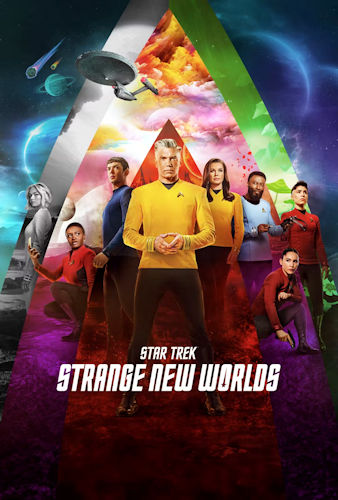
Watch Star Trek: Strange New Worlds on Prime Video
STAR TREK: STRANGE NEW WORLDS is based on the years Captain Christopher Pike manned the helm of the U.S.S. Enterprise. The series will follow Captain Pike, Officer Spock and Number One in the years before Captain Kirk boarded the U.S.S. Enterprise.
Watch Now!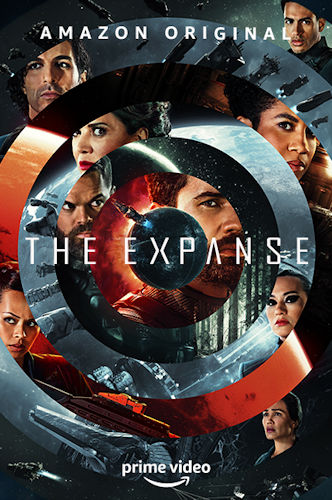
Watch The Expanse on Prime Video
Amidst political tension between Earth, Mars and the Belt, the single greatest conspiracy of all time must be unravelled.
Watch Now!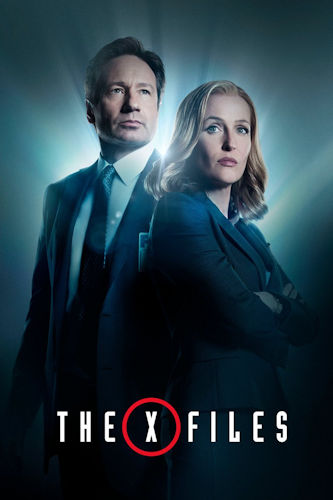
Watch The X-Files on Prime Video
A young FBI agent is assigned watchdog duty over a fellow agent, but finds herself drawn into his investigations of paranormal and unexplained phenomena.
Watch Now!As an Amazon Associate I earn from qualifying purchases.