✨ Byte-Sized Overview
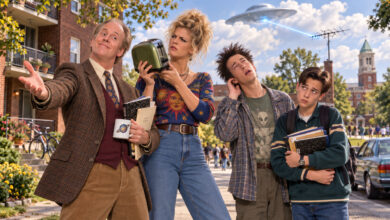
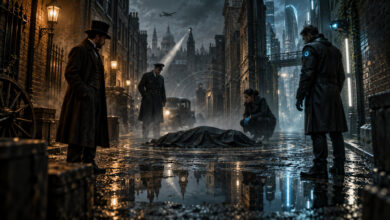
Georgia “George” Lass discovers that adult life is even shorter than expected when debris from the Mir space station brings her first day at work to an unusually decisive conclusion. Death, however, is not the escape from responsibility she might have imagined. She is immediately recruited as a grim reaper, proving that even the afterlife has entry-level positions.
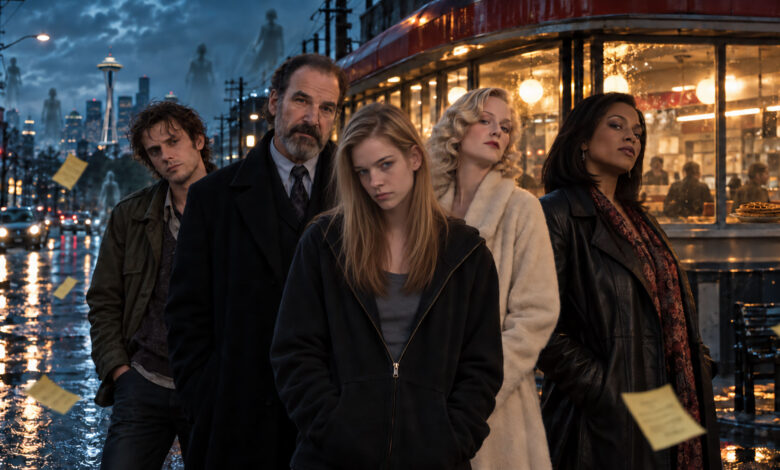
George joins a mismatched group responsible for removing people’s souls shortly before they die and guiding them towards whatever comes next. Their assignments arrive on yellow Post-it notes from the quietly authoritative Rube Sofer, while breakfast meetings take place at Der Waffle Haus. Nobody receives a salary, an explanation or anything resembling compassionate bereavement leave.
Created by Bryan Fuller, Dead Like Me combines supernatural fantasy, black comedy and coming-of-age drama. Its elaborate accidental deaths and unseen creatures provide the speculative machinery, but its real subject is the value of an ordinary life. George must hold down another office job, work alongside colleagues who have been dead for decades and watch her family grieve for the person she never allowed them to know properly.
The series was cancelled after two seasons, leaving parts of its mythology unexplored. A 2009 follow-up film, Dead Like Me: Life After Death, continues the story, although it does so without Mandy Patinkin and with Sarah Wynter replacing Laura Harris as Daisy. The original series nevertheless reaches a quietly satisfying emotional resting point of its own.
🎬 Transmission Details
- Show Title: Dead Like Me
- Years: 2003–2004
- Created By: Bryan Fuller
- Network: Showtime
- Seasons: 2
- Episodes: 29
- Starring: Ellen Muth, Mandy Patinkin, Callum Blue, Laura Harris, Jasmine Guy and Cynthia Stevenson
- Supporting Cast: Britt McKillip, Greg Kean, Christine Willes, Rebecca Gayheart, Crystal Dahl and Patricia Idlette
- Genre: Dark fantasy, black comedy, supernatural drama and speculative fiction
- Status: Cancelled after two seasons; followed by the 2009 film Dead Like Me: Life After Death
🎯 Signal Strength
- IMDb: 8.1/10
- Rotten Tomatoes: 84% average critics’ score; 89% average audience score
- Skully’s take: Death has quotas, paperwork and compulsory breakfast meetings. Eternity may remain unknowable, but middle management apparently survives everything.
Ratings checked 5 September 2026 and may change.
📼 Spoiler Mode: Story Sync for Pub Chat
Major spoilers follow for both seasons and the film Dead Like Me: Life After Death.
Season One: Eighteen-year-old Georgia Lass has withdrawn from her family, abandoned university and developed a philosophy based upon avoiding enthusiasm before enthusiasm can disappoint her. On the first day of her temporary office job, she is killed by a toilet seat falling from the disintegrating Mir space station.
George discovers that she has become a grim reaper in the External Influence Division. Reapers remove souls shortly before accidental or violent deaths, preventing those souls from experiencing what happens to their bodies. They do not cause the deaths themselves; small creatures known as gravelings arrange the fatal chains of events.
Rube Sofer leads George’s new group and distributes assignments through Post-it notes containing a name, location and estimated time of death. Her colleagues include chaotic British reaper Mason, uncompromising parking officer Roxy Harvey and cheerful Betty Rohmer. The living see reapers with different faces, allowing George to assume the identity of Millie Hagen and return to Happy Time Temporary Services without being recognised.
George initially resists her responsibilities. Her first assignment is a young girl, forcing her to understand that refusing to take a soul cannot prevent the appointed death. When she interferes with another scheduled fatality, events rearrange themselves around her intervention and innocent people suffer instead. Death may occasionally appear absurd, but its timetable is not open to negotiation.
Betty becomes George’s first genuine friend among the reapers. Her confidence hides a fascination with the destination awaiting the souls they collect, and she eventually follows one of them into its light. Betty disappears without explanation, leaving George shaken and Rube unable to tell her whether Betty has moved on or simply broken an important rule.
Daisy Adair transfers from New York to replace Betty. A former actress who died in 1938, Daisy conceals loneliness and insecurity beneath glamorous stories about her supposed encounters with Hollywood stars. She immediately clashes with George, moves into her home and treats personal boundaries as an idea requiring further study.
George’s second existence also requires employment because grim reaping provides neither wages nor accommodation. She returns to Happy Time as Millie and gradually forms a bond with her relentlessly optimistic supervisor, Delores Herbig. Delores becomes a surrogate maternal figure, offering George the encouragement that she rejected when she was alive.
Meanwhile, George’s family struggles with grief. Her mother Joy attempts to impose order upon an event she cannot control, while her father Clancy retreats from the marriage and begins an affair with one of his students. Her younger sister Reggie becomes convinced that George remains nearby, collecting toilet seats and hanging them from a tree as an eccentric memorial to the manner of her death.
George repeatedly visits her old home despite Rube’s warnings. Her family cannot recognise her new face, leaving her close enough to witness their pain but unable to repair the relationships she neglected. When her headstone is finally placed, George watches Joy and Reggie visit her grave. The experience helps her accept that her old life belongs to them now, even though she cannot stop caring about what happens to them.
Season Two: George begins the second season as a more capable reaper, although acceptance does not make the work painless. She advances at Happy Time, develops a complicated relationship with Trip Hesberg and becomes increasingly aware that “Millie” is no longer merely a disguise. The artificial identity is gradually acquiring friendships, responsibilities and a life of its own.
Joy and Clancy separate as the damage to their marriage becomes irreversible. Reggie continues to sense George’s presence but cannot persuade anyone that her sister still exists. George remains torn between protecting Reggie and recognising that every secret visit may prevent her family from moving forward.
The other reapers confront their own unfinished histories. Roxy attempts to impose justice upon a world that rarely behaves justly, while Mason struggles with addiction, self-loathing and his feelings for Daisy. Daisy becomes involved with Ray Summers, a controlling and abusive man whose behaviour grows increasingly dangerous.
When Ray attacks Daisy, Mason kills him while defending her. Because Ray was not scheduled to die and no reaper had removed his soul, something unnatural emerges from his body: a graveling retaining traces of his cruelty. It stalks Daisy and causes another accidental death before George manages to reap it, reducing the creature to dust. The incident confirms that the rules governing death can be broken, but not without consequences.
Rube’s investigations into his human past reveal that he left behind a wife and daughter. Records suggest that he was wanted for bank robbery, apparently after trying to provide money for his family. He eventually discovers that his daughter Rosie is still alive in a nursing home, but another reaper, Penny, has received the assignment to collect her soul.
Penny allows Rube to accompany her. Rosie recognises the father who disappeared from her childhood, and Rube sits beside her as she dies, singing the lullaby he once sang to her. The stern supervisor who has spent decades teaching others to accept death is finally allowed a few moments with the person whose life he most regretted missing.
The final episode takes place on Halloween, the one night when reapers appear to the living as they looked before they died. While the group handles the victims of a serial killer, George encounters Reggie at her grave. She allows her sister to see her original face, and Reggie appears to recognise her.
Rather than using the moment to reclaim her former life, George walks away. She understands that she is no longer the detached young woman buried beneath the headstone and begins to accept that her afterlife has given her the purpose she avoided while alive. The episode was not designed to answer every mystery, but it provides the series with an unexpectedly graceful final note.
Dead Like Me: Life After Death: Five years later, Der Waffle Haus burns down and Rube has disappeared, apparently having completed his quota and moved on. His replacement is Cameron Kane, a wealthy and charismatic reaper who exchanges Post-it notes for smartphones and encourages the group to treat death as a system they can exploit.
Without Rube’s moral authority, the reapers begin breaking the rules. Mason uses his immortality for financial gain, Daisy abandons a soul and Roxy prevents one of her assignments from dying. Cameron understands that their actions will create wider suffering but considers the consequences irrelevant.
George reconnects with Reggie and finally reveals her true identity. Their reunion becomes painful when George is assigned to reap the soul of Reggie’s boyfriend, Hudson. Reggie witnesses George performing the reap and must accept both Hudson’s death and the truth about her sister. George ultimately says goodbye, allowing Joy and Reggie to consider leaving their old home and beginning again.
The reapers discover that Cameron cannot be killed by ordinary means. After shooting and drowning fail, they dismember and cremate him, sending his ashes into orbit. Shortly afterwards, Post-it notes begin falling around George, implying that she has inherited Rube’s position as head reaper. The reluctant newcomer has become responsible for guiding everyone else—which is precisely the sort of promotion George would have avoided when she was alive.
🧠 Vibe Check
- ⚰️ A comedy about death that is really interested in how people choose to live.
- 🗂️ Workplace frustration divided between a temporary employment agency and an immortal bureaucracy.
- 🧇 Diner breakfasts, yellow Post-it notes and comforting routines surrounding deeply uncomfortable conversations.
- 💔 Honest explorations of grief, regret, family estrangement and the things people leave unsaid.
- 🗣️ Sardonic narration and sharp dialogue that allow humour and sadness to occupy the same scene.
- 🌧️ A muted, rain-soaked visual atmosphere that makes the supernatural elements feel surprisingly ordinary.
- ⏳ Mostly episodic stories with gradual character development and a modest amount of continuing mythology.
Perfect if you like: Pushing Daisies for whimsical mortality and Bryan Fuller’s peculiar imagination; The Good Place for an afterlife governed by questionable administration; or Six Feet Under for dark humour rooted in grief, family and the everyday presence of death.
Worth knowing before you start: The series depicts frequent accidental deaths, including those of children, and occasionally addresses suicide, addiction, abuse and violent crime. It normally approaches these subjects with compassion, but the shifts between broad comedy and genuine grief can be abrupt. Bryan Fuller left early in the first season, and the later episodes sometimes feel more conventional even though the central characters remain compelling.
Should you watch the film afterwards? Watch both seasons first, as Life After Death assumes familiarity with George, Reggie and the reaper mythology. The film offers additional closure, but the absence of Mandy Patinkin and the recasting of Daisy are noticeable. The television finale is also strong enough to serve as an ending if you would rather leave the group at Der Waffle Haus.
🚀 Why It’s a Sci-Fi Icon
Dead Like Me is primarily supernatural fantasy rather than conventional science fiction, but it belongs within the wider history of imaginative television. Its speculative rules create enough distance to examine mortality, employment and family grief from angles that an ordinary drama could not reach.
- ⚰️ It transforms death into an ordinary occupation. Reaping involves schedules, territorial divisions, performance expectations and an experienced supervisor trying to manage unreliable staff. The contrast between cosmic responsibility and workplace routine gives the programme much of its identity.
- 🌱 It uses the afterlife to tell a coming-of-age story. George dies before she has properly engaged with adulthood, then discovers that death will not excuse her from work, relationships or responsibility. Her emotional development feels earned because it arrives through repeated acts of reluctant compassion.
- 🧇 It finds warmth without becoming sentimental. Der Waffle Haus provides a place where people who cannot build conventional lives nevertheless form a recognisable community. Arguments, shared meals and grudging acts of kindness make the reapers feel more like a damaged family than a supernatural task force.
- 🎭 It allows flawed characters to remain genuinely difficult. George is defensive, Mason is irresponsible, Daisy is self-absorbed and Roxy can be intimidating. The programme understands their damage without treating every harmful decision as adorable eccentricity.
- 🖤 It balances macabre comedy with respect for grief. The elaborate deaths can be funny, but the souls left behind are rarely treated as disposable punchlines. Individual stories repeatedly return attention to regret, connection and the small details that make a life valuable.
- 📺 It helped establish Bryan Fuller’s distinctive television voice. The combination of death, visual whimsy, damaged outsiders and emotional sincerity anticipates ideas he would explore further in Wonderfalls and Pushing Daisies. Even after his early departure, the premise remains unmistakably his.
🔦 Deep Dive Highlights
- 🧍 George Lass: Ellen Muth gives George a defensive stillness that makes her smallest emotional shifts meaningful. Her sarcasm protects her from disappointment, but it cannot completely conceal an emerging capacity for empathy.
- 🗒️ Rube Sofer: Mandy Patinkin combines paternal warmth with quiet authority. Rube can make a yellow Post-it note feel like a commandment, yet his patience with George reveals how much tenderness exists beneath the rules.
- 🍺 Mason: Callum Blue turns irresponsibility into something alternately infuriating, funny and sad. Mason’s swagger rarely hides his loneliness for long, especially when his feelings for Daisy challenge his instinct to escape through drink or deception.
- 🎬 Daisy Adair: Laura Harris plays Daisy as a performance that occasionally cracks. Her Hollywood stories, vanity and sexual confidence form a carefully maintained persona concealing someone frightened that she has never truly been loved.
- 🚓 Roxy Harvey: Jasmine Guy gives Roxy formidable presence and superb comic timing. Her strict attitude towards reaping often makes her the group’s practical disciplinarian, although her anger is inseparable from her own complicated history.
- 👪 The Lass family: Joy, Clancy and Reggie prevent the series from treating George’s death as merely the entrance to a supernatural adventure. Their different responses to loss show how grief can expose fractures that were already present while creating entirely new ones.
- 🗃️ Happy Time and Delores Herbig: The temp agency mirrors the reaping operation as another workplace governed by mysterious systems and arbitrary expectations. Christine Willes makes Delores ridiculous, exhausting and unexpectedly kind—occasionally within the same motivational speech.
- 🪨 Gravelings and the machinery of death: The creatures provide a visible explanation for fatal accidents without explaining who controls the larger system. That incompleteness works in the programme’s favour: George learns how to do the job, but certainty about the universe remains stubbornly above her pay grade.
Skully's independent editorial rating A darkly funny and unexpectedly tender study of mortality, responsibility and belated growing up, carried by a wonderfully difficult heroine and Mandy Patinkin at his most quietly commanding.Skully's Score
What works
What may not
Recommended Sci-Fi TV Products

Watch Fallout on Prime Video
Based on one of the greatest video games of all time, Fallout is the story of haves and have-nots in a world in which there’s almost nothing left to have.
Watch Now!
Watch The Expanse on Prime Video
Amidst political tension between Earth, Mars and the Belt, the single greatest conspiracy of all time must be unravelled.
Watch Now!
Watch The Walking Dead on Prime Video
County Sheriff Rick Grimes, his wife, son and a small eclectic group try to survive constant attacks from zombies and other threats.
Watch Now!As an Amazon Associate I earn from qualifying purchases.