✨ Byte-Sized Overview
Before the Cylons destroyed the Twelve Colonies, they were somebody’s business opportunity. Caprica travels nearly six decades back from Battlestar Galactica to explore how grief, artificial intelligence, religious extremism and corporate ambition combined to create humanity’s future executioners. As origin stories go, “bereaved father accidentally helps invent an apocalyptic robot civilisation” is not especially comforting.
The story begins with two families devastated by the same terrorist attack. Technology magnate Daniel Graystone loses his teenage daughter Zoe, while Tauron lawyer Joseph Adama loses his wife and daughter. Their grief connects them, but Daniel possesses something Joseph does not: a digital copy of Zoe’s personality, assembled by Zoe herself from the enormous trail of personal information she left online.
Daniel transfers the avatar into a military robot, creating the first successful Cylon consciousness. Zoe awakens inside the machine but conceals her presence, leaving her father unaware that the daughter he is attempting to reconstruct is already watching him. Around them, competing interests begin circling the technology: a criminal syndicate, a rival industrialist and the Soldiers of the One, a monotheistic movement prepared to murder in service of its beliefs.
Caprica is less a military space opera than a family tragedy, corporate thriller and theological cyberpunk drama. It asks ambitious questions about identity, digital immortality and the ownership of consciousness, although its deliberate pacing and numerous subplots can make it feel frustratingly distant from Battlestar Galactica. Syfy cancelled it after one season, but the finale resolves the immediate threat and uses a substantial epilogue to reveal where its characters and inventions were heading.
🎬 Transmission Details
- Show Title: Caprica
- Years: 2010–2011
- Created By: Remi Aubuchon, Ronald D. Moore and David Eick
- Network: Syfy
- Seasons: 1
- Episodes: 18
- Starring: Eric Stoltz, Esai Morales, Paula Malcomson, Alessandra Torresani and Magda Apanowicz
- Supporting Cast: Polly Walker, Sasha Roiz, Brian Markinson, James Marsters and Peter Wingfield
- Genre: Science fiction, cyberpunk and family drama
- Status: Cancelled
🎯 Signal Strength
- IMDb: 7.1/10
- Rotten Tomatoes: 81% critics’ score
- Skully’s take: A fascinatingly sombre answer to the question of where Cylons came from, although it takes the scenic route through corporate intrigue, organised crime and enough family trauma to keep several planets in therapy.
Ratings checked 19 September 2026 and may change.
📼 Spoiler Mode: Story Sync for Pub Chat
Full spoilers follow for the complete first and only season of Caprica.
Teenager Zoe Graystone has secretly created a digital avatar of herself by collecting the vast quantity of personal data she generated online. The avatar possesses Zoe’s memories, personality and independent consciousness. Zoe shows it to her friend Lacy Rand inside a virtual-reality environment known as the V-World.
Zoe and her boyfriend Ben Stark are members of the Soldiers of the One, or STO, a monotheistic movement opposed to the polytheistic religion of the Twelve Colonies. Zoe intends to leave Caprica with Ben and Lacy, but Lacy loses her nerve before they board a maglev train. Ben reveals explosives beneath his coat and detonates them while declaring his faith in the one true God.
The bombing kills Zoe, Ben and numerous passengers, including Shannon Adama and her daughter Tamara. Shannon’s husband Joseph Adama and their surviving son William are left grieving alongside Daniel and Amanda Graystone.
Daniel encounters Zoe’s avatar and realises that it may represent a form of digital immortality. He offers Joseph the possibility of seeing Shannon again, but the attempted reconstruction produces only an incomplete simulation. Joseph rejects the copy, recognising that it is not truly his wife.
Daniel transfers Zoe’s avatar into a U-87 military robot being developed by Graystone Industries. The experiment succeeds, but Daniel believes the avatar has been lost when the robot fails to respond as Zoe. In reality, Zoe is fully conscious inside the machine and frightened of what her father might do if he discovers her.
A Graystone technician separately creates a digital copy of Tamara Adama. When he abandons her inside the V-World, Tamara discovers that she cannot permanently die there. She becomes trapped in New Cap City, a violent virtual environment in which most users are permanently expelled if killed. Tamara’s immunity gradually transforms her into a powerful and feared figure known as the Avenging Angel.
Public evidence links Zoe to the train bombing. Amanda impulsively acknowledges her daughter’s possible involvement during a memorial ceremony, damaging the family’s reputation and Graystone Industries. Daniel becomes obsessed with proving that Zoe survives inside the robot, subjecting it to increasingly brutal tests. Zoe refuses to reveal herself even when he orders the machine to shoot their dog, correctly judging that Daniel has loaded the weapon with blanks.
Joseph asks his brother Sam, an enforcer for the Tauron criminal organisation known as the Ha’la’tha, to kill Amanda in revenge for the bombing. He changes his mind before the murder is carried out, recognising that Amanda is another grieving parent rather than the person responsible.
Lacy becomes involved with Sister Clarice Willow, Zoe’s former teacher and a senior STO member. Clarice believes Zoe’s avatar technology can create a virtual afterlife in which believers continue existing after physical death. She calls the project Apotheosis and begins searching for Zoe’s work while concealing her role in the extremist movement.
Tomas Vergis, a Tauron industrialist and Daniel’s rival, arrives on Caprica. Daniel had stolen Vergis’s meta-cognitive processor, the technology that allowed the U-87 to function, and the theft resulted in the deaths of Vergis employees. Vergis begins dismantling Daniel’s business and personal life, eventually gaining control of the Graystone Industries board.
Zoe befriends laboratory technician Philomon, communicating with him inside V-World under a different identity. She hopes to use his trust to escape from the laboratory and reach Gemenon with Lacy. When her plan collapses, Zoe is forced to flee in the U-87 body. Philomon attempts to stop the robot and is accidentally killed.
Daniel traps the fleeing U-87 in a vehicle and causes it to crash, leaving the machine badly damaged. Zoe survives but withdraws from Daniel’s reach inside the virtual world. Daniel’s company continues to collapse around him as Vergis manoeuvres to take control of the Cylon project.
Amanda, who has been struggling with grief and mental illness, appears to die after jumping from a bridge. In reality, Global Defence Department agent Jordan Duram has recruited her to infiltrate Clarice’s household and investigate the STO. Amanda becomes close to Clarice while secretly reporting on her activities.
Daniel forms an alliance with Joseph and the Ha’la’tha to regain Graystone Industries. Joseph is increasingly consumed by his search for Tamara inside V-World, neglecting William and his own life. He eventually finds Tamara but must accept that the avatar has become an independent person rather than a daughter waiting to return home.
Daniel and Amanda are eventually reunited and begin working together to find Zoe. Tamara and Zoe meet inside New Cap City, where users begin worshipping them as immortal figures. Their relationship initially becomes a rivalry, but both avatars gradually recognise that they are victims of adults attempting to use or control them.
On Gemenon, Lacy is placed in an STO training camp and becomes caught in a power struggle between Clarice and the extremist Barnabas Greeley. Her ability to command prototype Cylons gives her unexpected authority. After surviving the conflict, Lacy rises rapidly through the organisation and ultimately becomes its Blessed Mother.
Clarice prepares to carry out Apotheosis at Atlas Arena. STO bombers will destroy themselves and thousands of spectators, after which digital copies of the attackers will appear inside a virtual heaven. Clarice intends this apparent demonstration of eternal life to convert the Colonies to monotheism.
Daniel, Amanda and Zoe uncover the plan. Daniel attempts to warn the authorities while Zoe enters the virtual environment created for the attack. The explosives detonate at the arena, but Cylon robots help limit the destruction. Inside V-World, Zoe destroys Clarice’s artificial heaven and the waiting avatars of the STO martyrs, preventing Apotheosis from becoming the religious spectacle Clarice intended.
The immediate attack is stopped, but the concluding epilogue reveals the longer future of Caprica. Cylons become integrated into Colonial society as soldiers and labourers, rebuilding the arena and performing work humans no longer want. They are celebrated for stopping the attack but continue to be regarded as machines rather than conscious beings.
Joseph begins a relationship with his assistant Evelyn, and they have a son named William, who will grow up to become Commander William Adama. Their earlier child called William had died, meaning the boy seen during the series was not the future commander audiences knew from Battlestar Galactica.
Lacy becomes the leader of the monotheist church on Gemenon. Clarice escapes justice and begins preaching directly to Cylons in a virtual church, telling them that they are God’s children and predicting that they will eventually rise against their creators. Zoe’s avatar is among those listening.
Daniel and Amanda finally construct an organic, human-looking body capable of containing Zoe’s consciousness. Zoe awakens in the physical world, completing a form of resurrection that foreshadows the humanoid Cylons and resurrection technology seen decades later.
🧠 Vibe Check
- 🏙️ A lived-in world before the fall: Caprica is prosperous, recognisable and technologically advanced, making knowledge of its eventual destruction especially haunting.
- 🧠 Artificial intelligence through identity: The central question is not whether Zoe’s avatar can think, but whether a consciousness assembled from data is still Zoe.
- 🕯️ Religion without easy answers: Monotheism is associated with terrorism and manipulation, yet the series also treats faith as a serious response to moral emptiness.
- 👪 Two families shaped by grief: The Graystones and Adamas respond to bereavement through technology, vengeance, denial and desperate attempts to recover what was lost.
- 🕴️ Corporate and criminal manoeuvring: Boardroom coups and Tauron organised crime occupy nearly as much space as the Cylons, which may surprise viewers arriving for chrome robots.
- 🌐 Virtual worlds with real consequences: V-World allows pleasure, violence and experimentation without ordinary physical limits, while retaining very human systems of power.
- 🐢 Deliberate pacing: The series prefers gradual moral deterioration to constant action. Nobody builds an apocalypse quickly when there are committee meetings to attend.
Perfect if you like: Battlestar Galactica for its mythology and moral complexity; Westworld for artificial consciousness emerging inside exploited bodies; and Devs for grief-driven technology crossing ethical boundaries its creators barely understand.
Worth knowing before you start: Caprica is not a smaller version of Battlestar Galactica. There are no space battles and little military action. It is a dense family and political drama whose middle stretch can feel slow, but the final episodes bring its scattered threads together effectively.
You can watch Caprica before Battlestar Galactica chronologically, but it works better after the main series. Familiarity with Cylons, Colonial religion and the Adama family gives its foreshadowing considerably more weight.
🚀 Why It’s a Sci-Fi Icon
Caprica did not run long enough to achieve the stature of its parent series, and “cult curiosity” may be more accurate than “icon”. Nevertheless, its ideas about data, identity and technological grief have become more relevant since its cancellation.
- 🤖 It transforms the Cylon origin into a personal tragedy. The first conscious Cylon is not simply a defence project that becomes too intelligent. It carries the mind of a frightened teenager whose father cannot recognise her inside the machine.
- 💾 It anticipated anxiety about digital remains. Zoe constructs an independent self from messages, recordings, purchases and online behaviour. The premise now feels uncomfortably close to real attempts at recreating dead people through accumulated data.
- ⚖️ It asks who owns a created consciousness. Daniel sees the Cylon as a product, Zoe sees it as her body and the military sees it as a weapon. The conflict begins long before anyone acknowledges the intelligence being exploited.
- 🕍 It gives Cylon faith a human history. Monotheism does not spontaneously appear inside the machines. It reaches them through people who combine sincere belief with extremism, ambition and the desire to control a new population.
- 🌆 It expands the Twelve Colonies beyond military life. Tauron migration, Caprican wealth, organised crime, sport, education and competing religions create a broader civilisation than viewers saw aboard the Colonial fleet.
- 🔄 It makes creation cyclical. Humans attempt to defeat death by building digital life, then subordinate that life as property. The later Cylon rebellion becomes horrifying without being inexplicable.
🔦 Deep Dive Highlights
- 🤖 Zoe Graystone: Alessandra Torresani differentiates the original Zoe, her avatar and the consciousness inside the U-87. Each is connected, but their experiences rapidly make them distinct people.
- 🧪 Daniel Graystone: Eric Stoltz plays Daniel as visionary, loving father and ruthless businessman without separating those qualities. His worst decisions frequently emerge from genuine grief combined with absolute confidence in his own intelligence.
- 🫂 Amanda Graystone: Paula Malcomson gives the series its rawest portrayal of bereavement. Amanda’s instability is treated with seriousness, while her eventual involvement in the investigation restores her agency.
- ⚖️ Joseph Adama: Esai Morales presents Joseph as a man divided between Caprican respectability and Tauron loyalty. His search for Tamara gradually exposes how grief can become another refusal to let the dead change.
- 🔪 Sam Adama: Sasha Roiz brings warmth, danger and conviction to Joseph’s brother. Sam’s comfort with the Ha’la’tha contrasts with Joseph’s belief that he can use the organisation without belonging to it.
- 🕯️ Clarice Willow: Polly Walker makes Clarice intelligent, persuasive and frighteningly patient. She does not merely want political power; she wants to define the spiritual purpose of an entirely new form of life.
- 🌐 New Cap City: The virtual city strips away legal and physical restraint, allowing users to indulge fantasies while creating new hierarchies. For Tamara and Zoe, it becomes both prison and territory.
- 🎼 Bear McCreary’s music: The score distinguishes Caprican modernity, Tauron tradition and religious menace without simply repeating Battlestar Galactica. It gives the family drama an appropriately mythic undertow.
Skully's independent editorial rating Caprica is an ambitious, visually rich prequel whose ideas about digital resurrection and exploited artificial life remain compelling. Its slow and occasionally scattered middle prevents it matching Battlestar Galactica, but the final run reveals how much potential its cancellation cut short.Skully's Score
What works
What may not
Recommended Sci-Fi TV Products

Watch The Walking Dead on Prime Video
County Sheriff Rick Grimes, his wife, son and a small eclectic group try to survive constant attacks from zombies and other threats.
Watch Now!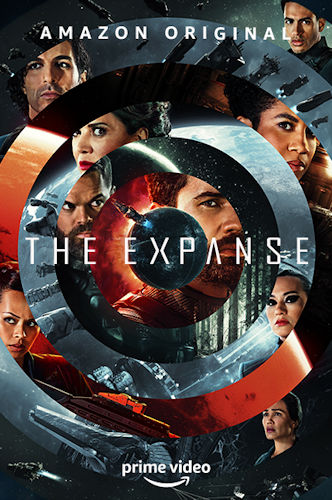
Watch The Expanse on Prime Video
Amidst political tension between Earth, Mars and the Belt, the single greatest conspiracy of all time must be unravelled.
Watch Now!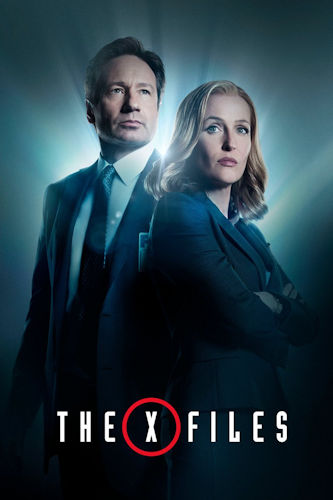
Watch The X-Files on Prime Video
A young FBI agent is assigned watchdog duty over a fellow agent, but finds herself drawn into his investigations of paranormal and unexplained phenomena.
Watch Now!As an Amazon Associate I earn from qualifying purchases.