✨ Byte-Sized Overview
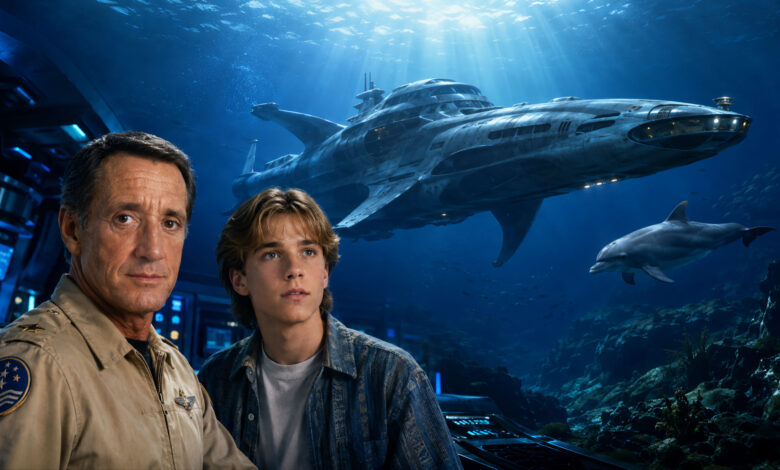
Space is not the only place to find strange new worlds. In seaQuest DSV, humanity’s next frontier lies beneath the waves, where underwater colonies, scientific discoveries and international disputes keep one exceptionally well-equipped submarine very busy.
The series begins in the once-futuristic year of 2018. Captain Nathan Bridger, a retired naval officer and scientist, reluctantly returns to command the seaQuest, a vessel designed for both exploration and defence. Alongside him are an international crew, teenage computer genius Lucas Wolenczak and Darwin, a dolphin whose technological assistance gives him rather more to say than most shipboard mascots.
With Steven Spielberg among its executive producers, the show combines ambitious underwater imagery with environmental concerns, family-friendly adventure and the familiar appeal of capable people facing the unknown.
It also changes considerably during its three-season run. Scientific exploration gives way to stranger adventures, before the final season, renamed seaQuest 2032, adopts a harder military edge.
The result is an uneven but distinctive piece of 1990s science fiction: sometimes thoughtful, sometimes wonderfully daft, and rarely short of somewhere interesting to dive.
🎬 Transmission Details
- Show title: seaQuest DSV — renamed seaQuest 2032 for Season 3
- Years: 1993–1996
- Created by: Rockne S. O’Bannon
- Network (US): NBC
- Network (UK): ITV
- Seasons: 3
- Episodes: 57 — or 59 when the two feature-length episodes are split into two parts each
- Starring: Roy Scheider, Jonathan Brandis, Don Franklin, Stephanie Beacham, Stacy Haiduk, Ted Raimi, Michael Ironside, Peter DeLuise and Michael DeLuise
DSV stands for Deep Submergence Vehicle. The original title covers the first two seasons; seaQuest 2032 is their continuation, not a separate reboot.
The 57-episode count comprises 23 episodes in the first season, 21 in the second and 13 in the third. Different listings sometimes split the feature-length pilot and the second-season opener, “Daggers”, producing the higher total.
The series was cancelled during its third season and does not receive a comprehensive farewell. However, its largely episodic structure means that many individual adventures still provide satisfying, self-contained stories.
One viewing wrinkle: the original broadcasts occasionally placed episodes out of sequence. “Blindsided”, for example, belongs before the second-season finale, “Splashdown”, despite airing afterwards.
🎯 Signal Strength
- IMDb: 6.7/10
- Rotten Tomatoes: 46% critics / 71% audience — Season 1
- Skully’s take: They finally got Roy Scheider a bigger boat. Then they gave the dolphin a speaking part.
Ratings checked in September 2026 and subject to change. Rotten Tomatoes figures refer specifically to the first season and draw on a relatively small pool of reviews and audience ratings.
The appeal lies in the setting, the crew and the sense that exploring our own planet might be just as exciting as visiting another one. The drawbacks are inconsistent writing, dated effects and changes of direction that can make successive seasons feel like competing interpretations of the same idea.
Approach it as an imaginative adventure series with an uneven record, rather than an overlooked masterpiece, and there is plenty to enjoy.
📼 Spoiler Mode: Story Sync for Pub Chat
Major spoilers for all three seasons follow, including the changes of vessel, command and setting.
By 2018, humanity has expanded into the oceans as pressure on resources drives the development of underwater settlements and industries. The United Earth Oceans Organization, or UEO, attempts to maintain order in this increasingly contested environment. Its flagship is the seaQuest, a huge, advanced submarine capable of scientific research, rescue operations and armed intervention.
Nathan Bridger helped design the vessel but has withdrawn from naval life after personal losses. He is persuaded to take command following the removal of its previous captain, Marilyn Stark. When Stark resurfaces aboard a hostile submarine, Bridger must confront the possibility that the ship he hoped would serve discovery could become another instrument of destruction.
The early series builds around the tension between those purposes. Commander Jonathan Ford represents military professionalism, while Dr Kristin Westphalen heads the scientific team. Bridger must negotiate between operational demands and the conviction that encountering something unfamiliar should not automatically mean treating it as a threat.
Lucas Wolenczak becomes central to the crew’s work and to Bridger’s life. A brilliant teenager with an emotionally distant father, Lucas finds a sense of belonging aboard the submarine. His work includes technology that allows Darwin to communicate with people. Beneath the gadgetry, his relationship with Bridger gives the series a surrogate father-and-son story.
Most first-season adventures involve discrete crises: endangered settlements, dangerous research, political disputes and discoveries whose ownership quickly becomes contentious. Even this comparatively grounded year ventures into the extraordinary, including the discovery of an ancient alien spacecraft. The series never remains entirely within plausible oceanography.
The season ends with a disaster involving an experimental power project associated with Lucas’s father. When the resulting geological crisis threatens catastrophic consequences, Bridger sacrifices the original seaQuest to stop it. The vessel is lost, but the mission survives.
Season two introduces a replacement submarine and a substantially altered crew. New arrivals include Tony Piccolo, whose surgically implanted gills allow him to breathe underwater, and Dagwood, a genetically engineered life form. The treatment of engineered people, known as GELFs and disparagingly called “Daggers”, introduces questions about prejudice, exploitation and whether creating a person gives anyone the right to control them.
The stories also become much more fantastical. Psychic abilities, time displacement, dangerous genetic experiments and extraterrestrial encounters increasingly replace the original emphasis on exploration. Dr Wendy Smith’s psychic talents make that shift part of the regular crew rather than something confined to occasional visitors.
The second-season finale, “Splashdown”, takes the change to its extreme. An alien spacecraft transports seaQuest and its crew to another planet, where they become involved in a civil war. The adventure ends disastrously, leaving the vessel’s fate and the survival of its people in doubt.
When the third season begins, seaQuest returns to Earth after a ten-year disappearance. It is now 2032, the crew has lost a decade of history, and the political landscape has changed. The UEO is weaker, while the authoritarian Macronesian Alliance has become a major threat.
Captain Oliver Hudson takes command, replacing Bridger’s more exploratory approach with stricter discipline and a clearer military purpose. Lucas must formally enlist to remain aboard, changing his position from gifted civilian to officer with responsibilities beyond solving the immediate technical problem.
The final season concentrates more heavily on territorial conflict, corporate manipulation and difficult command decisions. Bridger returns for guest appearances, allowing the series to bring his principles into direct conflict with Hudson’s priorities.
There is no final victory that settles the future of the oceans. “Weapons of War”, the last episode broadcast in the original US run, introduces a dangerous technologically advanced power, the Chaodai, rather than closing the story. The crew’s mission continues, but the audience’s voyage ends before those new tensions can fully develop.
🧠 Vibe Check
- 🌊 Exploration with the lights turned blue: Submarine corridors, underwater settlements and unfamiliar marine environments provide an appealing alternative to starships and distant planets.
- 👨👦 A crew that becomes a family: Friendship, mentorship and everyday shipboard friction give the technological adventures their warmer side.
- 🧬 Science mixed with increasingly wild speculation: Environmental concerns share space with genetic engineering, psychic powers and encounters well beyond ordinary marine biology.
- ⚓ Three seasons with different priorities: Expect exploratory adventure first, more extravagant science fiction second and a sharper military focus in seaQuest 2032.
Perfect if you like: Star Trek: The Next Generation for its exploratory crew and ethical dilemmas, Voyage to the Bottom of the Sea for submarine adventure, or Stargate SG-1 for a team tackling a different scientific or military problem each week.
This is generally more accessible and less relentlessly grim than many modern science-fiction dramas. However, it still includes violence, deaths, frightening creatures and darker material, particularly as the series progresses.
Its original 1990s television rhythms are part of the experience. Episodes usually build towards a contained adventure rather than functioning as chapters in one uninterrupted mystery.
🚀 Why It’s a Sci-Fi Icon
seaQuest DSV has a stronger claim to affectionate cult status than to consistent critical acclaim. Its distinctive setting and memorable personalities nevertheless give it a recognisable place in the genre.
- 🌍 It finds a frontier on our own planetThe central idea is immediately inviting: humanity does not need to leave Earth to encounter environments it barely understands. Moving the exploratory adventure beneath the sea changes its possibilities. Discovery, resource exploitation and environmental damage exist in the same physical space, making the crew’s scientific and political responsibilities difficult to separate.
- 🔬 It treats curiosity as a worthwhile ambitionAt its best, particularly early on, the series suggests that understanding a problem can be more important than overpowering it. Scientists are not merely people who provide information before the weapons are fired. Their priorities can challenge the mission itself, and Bridger’s respect for discovery gives those disagreements a sympathetic centre.
- 👨👦 It gives its teenage genius an emotional roleLucas could easily have been nothing more than a convenient answer to every computer-related emergency. Jonathan Brandis gives him frustration, loneliness and an understandable desire to be taken seriously. His connection with Bridger makes the submarine somewhere a young person can grow, not simply a place where exceptional intelligence is useful.
- 🛠️ It creates a memorable technological worldThe seaQuest’s distinctive shape, extensive interiors and accompanying underwater equipment give the series an identity beyond its familiar adventure plots. Its digital effects show their age, but the ambition remains visible. The submarine feels like a place designed to support a whole series of discoveries rather than a vehicle waiting between action scenes.
- 🐬 It connects entertainment with real marine scienceOceanographer Robert Ballard served as technical adviser during the first season, whose original closing segments discussed real scientific subjects. That educational element reinforced the idea that the ocean itself deserved attention. The programme might wander into fantasy, but it also invited viewers to become interested in what researchers were genuinely discovering.
- ⚖️ It asks who gets to belongThe introduction of genetically engineered people gives the series another way to explore the difference between usefulness and acceptance. Dagwood’s loyalty and vulnerability challenge the assumptions of characters who see his origins before his individuality. The treatment is not always subtle, but the underlying question fits naturally into a show about encountering unfamiliar life.
🔦 Deep Dive Highlights
- 🚢 The seaQuest: The submarine is simultaneously a research station, a defensive weapon and a home. Those overlapping functions create some of the show’s best tensions. A ship equipped to investigate the unknown is also powerful enough to intimidate it, leaving the captain to decide which capability should define the mission.
- ⚓ Captain Nathan Bridger: Roy Scheider brings an experienced, approachable presence to a character who would often prefer to be studying the ocean rather than policing it. Bridger’s authority comes partly from his willingness to listen. His reluctance to treat every situation as a military problem is a strength, although the series repeatedly tests how far that approach can take him.
- 💻 Lucas Wolenczak: Lucas provides technical ingenuity, youthful impatience and a perspective outside the established chain of command. His best stories recognise that being exceptional at computers does not make someone emotionally self-sufficient. The gap between what he can accomplish and what he still needs from other people gives Brandis more to work with than the standard “boy genius” role.
- 🐬 Darwin: The dolphin is the show’s most instantly recognisable supporting character. His communication depends on technology rather than ordinary human speech, but the dramatic effect is the same: the crew must engage with a non-human intelligence as a participant. He can be playful and sentimental, yet he also embodies the original premise that remarkable minds may already exist beneath the surface.
- 🧬 Dagwood: Peter DeLuise plays a character whose physical strength contrasts with his gentleness and vulnerability. Dagwood’s stories are most effective when they move beyond treating his difference as a source of humour. Questions about dignity, friendship and independence give him significance beyond the genetic experiments that brought him into existence.
- 🎖️ Captain Oliver Hudson: Michael Ironside’s arrival changes the atmosphere on the bridge immediately. Hudson expects discipline and sees seaQuest’s responsibilities through a more explicitly strategic lens. However, he is more interesting than a simple authoritarian replacement: his command also involves recognising potential, demanding growth and deciding what responsibility requires in an increasingly hostile world.
seaQuest DSV is worth revisiting for its underwater world, its exploratory spirit and the relationships that develop aboard its extraordinary vessel. Its changes of direction can be frustrating, and not every adventure survives close scrutiny. But the core invitation remains appealing: gather a capable crew, descend into the unknown and discover that our own planet still has stories worth telling.
Recommended Sci-Fi TV Products
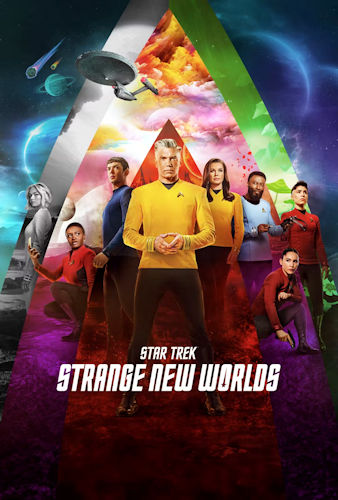
Watch Star Trek: Strange New Worlds on Prime Video
STAR TREK: STRANGE NEW WORLDS is based on the years Captain Christopher Pike manned the helm of the U.S.S. Enterprise. The series will follow Captain Pike, Officer Spock and Number One in the years before Captain Kirk boarded the U.S.S. Enterprise.
Watch Now!
Watch The Expanse on Prime Video
Amidst political tension between Earth, Mars and the Belt, the single greatest conspiracy of all time must be unravelled.
Watch Now!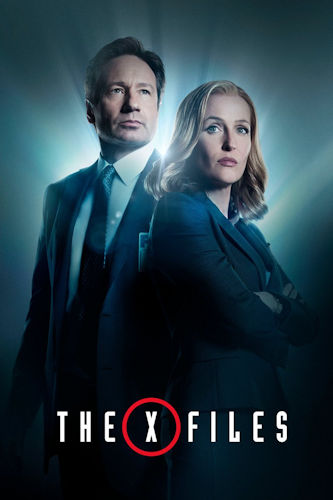
Watch The X-Files on Prime Video
A young FBI agent is assigned watchdog duty over a fellow agent, but finds herself drawn into his investigations of paranormal and unexplained phenomena.
Watch Now!As an Amazon Associate I earn from qualifying purchases.