✨ Byte-Sized Overview
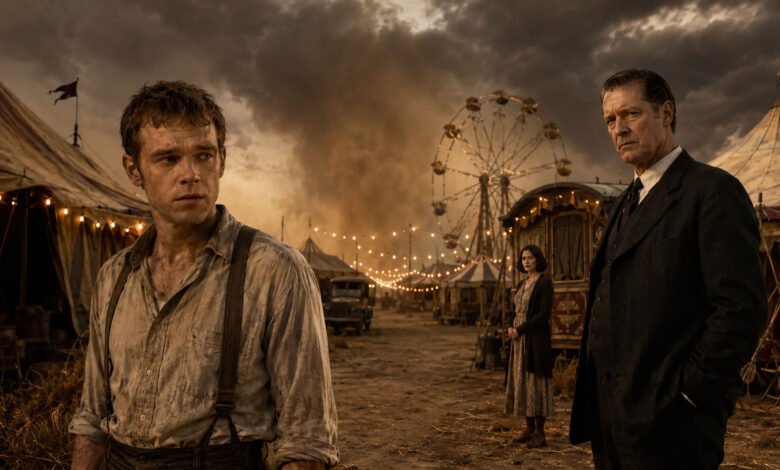
Across the dust-choked roads of Depression-era America, a travelling carnival offers a few hours of distraction to people who have very little left. Behind its painted signs, fortune-telling booths and battered trailers, something much older than the fairground is stirring.
Carnivàle follows Ben Hawkins, a troubled young drifter with extraordinary abilities, and Brother Justin Crowe, a California preacher whose growing influence accompanies increasingly disturbing supernatural experiences. Their stories unfold hundreds of miles apart, connected by visions, buried histories and a conflict neither fully understands.
Created by Daniel Knauf, this is dark fantasy and supernatural horror rather than conventional science fiction. Its appeal lies in the same territory as the most ambitious speculative television: an elaborate mythology, morally complicated characters and the possibility that reality operates according to rules nobody has properly explained.
It is also a remarkably atmospheric period drama. The dust, exhaustion and poverty are not decorative background. They create a world in which people desperately need something to believe in, making the arrival of miracles both hopeful and dangerous.
🎬 Transmission Details
- Show title: Carnivàle
- Years: 2003–2005
- Created by: Daniel Knauf
- Network (US): HBO
- Network (UK): FX
- Seasons: 2
- Episodes: 24
- Starring: Nick Stahl, Clancy Brown, Clea DuVall, Amy Madigan, Michael J. Anderson, Tim DeKay, Patrick Bauchau, Adrienne Barbeau, Debra Christofferson
Each season contains 12 episodes. The story begins in 1934, following a travelling carnival across the American Dust Bowl while a parallel storyline develops around Brother Justin’s ministry in California.
One important warning before you start: HBO cancelled Carnivàle after its second season. Knauf had envisioned a much larger six-season story, so the final episode leaves major questions unresolved. There is a significant confrontation and substantial development, but this is not a completed narrative with every loose end tied up.
Watch in release order. Dreams, apparently incidental conversations and fleeting images acquire significance later, making this a particularly poor candidate for watching while answering emails.
🎯 Signal Strength
- IMDb: 8.4/10
- Rotten Tomatoes: No critic score listed / 93% audience — season one
- Skully’s take: Come for the fortune-telling and fairground lights. Stay because the preacher is terrifying and the apocalypse appears to have bought a ticket.
Ratings checked in September 2026 and subject to change. Rotten Tomatoes’ first-season audience score is based on fewer than 50 ratings.
The strongest reasons to watch are the atmosphere, ensemble cast and gradual convergence of two deeply unsettling stories. Carnivàle rewards attention to character and imagery rather than providing a regular supply of clear explanations.
The reservations are equally important. Its deliberate pace can feel frustrating, the mythology remains partially concealed and the cancellation prevents a complete payoff. If unresolved mysteries ruin a series for you, approach cautiously. If an absorbing fictional world can justify the journey even without a finished map, there is a great deal here to appreciate.
📼 Spoiler Mode: Story Sync for Pub Chat
Major spoilers for both seasons, including the final episode, follow.
Ben Hawkins begins the story isolated, impoverished and burdened by abilities he does not understand. After his mother dies, a travelling carnival takes him in. Its practical affairs are overseen by Samson, but ultimate authority belongs to the mysterious Management, whose presence is concealed inside a trailer.
Ben can heal, but his gift is not a limitless supply of benevolent magic. Restoring life or health draws vitality from elsewhere. An apparently miraculous act can leave the surrounding world diminished, turning compassion into a frightening calculation. His struggle is therefore not simply whether to use his power, but whether he can accept responsibility for its consequences.
The carnival provides shelter without providing straightforward safety. The blind mentalist Lodz takes a particular interest in Ben’s abilities, while other members of the company have their own secrets, loyalties and supernatural sensitivities. Ben’s search for answers becomes linked to Henry Scudder, his absent father, whose history intersects with the carnival’s past.
Meanwhile, Brother Justin Crowe ministers to struggling people in California alongside his sister, Iris. Initially, he is not presented as a villain confidently pursuing an evil master plan. His experiences frighten and bewilder him. He believes he has a religious purpose, but increasingly discovers that he can manipulate people through their fears, guilt and hidden desires.
The contrast between the two men becomes central. Ben distrusts his own gift, while Justin moves towards interpreting his power as proof of authority. Their dreams connect them through images of war, a mysterious tattooed figure and an approaching catastrophe. The audience gradually recognises an ancient struggle taking shape through very human weaknesses.
Justin’s ministry expands, helped by radio and the public image cultivated around him. His ability to reach desperate listeners transforms private conviction into collective influence. Iris is not merely an innocent supporter: her determination to protect and advance her brother draws her into the darkness surrounding his mission.
At the carnival, supernatural events repeatedly break through the routines of work and performance. The visit to the mining town of Babylon is particularly disturbing, revealing a place where the dead have not relinquished their hold on the living. The killing of Dora Mae Dreifuss brings the danger brutally close to the company, puncturing any suggestion that these encounters are simply mysterious diversions.
Sofie, a tarot reader who cares for her apparently unresponsive mother, Apollonia, becomes increasingly important. Their relationship is dominated by psychic communication, resentment and a struggle for independence. Sofie’s connection to Ben offers the possibility of escape from that claustrophobic bond, but her own origins bind her to the larger conflict.
Season two pushes the competing storylines towards New Canaan, the centre of Justin’s growing movement. Ben’s pursuit of Scudder becomes a race against Justin’s agents, while Management’s concealed knowledge forces Ben to confront how much of his journey has been directed by others.
The ordinary members of the carnival are gradually drawn into the confrontation. Jonesy’s experience of Ben’s healing power gives the company a reason to believe that their troubled young companion is more than another drifter. Their practical loyalty becomes a crucial counterweight to the grand claims of prophecy and destiny.
Sofie, meanwhile, enters Justin’s household and discovers that he is her father. Her place in the story is far more consequential than either the carnival or the ministry initially understands.
In the finale, Ben and Justin finally confront one another in a cornfield. Ben strikes Justin in the vulnerable point within his tree tattoo, but suffers severe wounds himself. The carnival retrieves Ben alive and carries him away, placing him in the bed previously occupied by Management.
The apparent victory is immediately destabilised. Sofie shoots Jonesy after he frees her, then approaches Justin’s fallen body. As she places her hands on him, the surrounding corn withers, echoing the transfer of life associated with Ben’s healing.
The implication is that Sofie possesses a comparable power and is restoring Justin. Her motives, the full nature of her role and the consequences for the surviving characters remain unresolved.
That is where the television story stops. It offers a collision between its principal forces, not the conclusion of their struggle. The creator’s later explanations and plans provide additional context, but they should not be mistaken for events that appeared in a completed third season.
🧠 Vibe Check
- 🎪 Weather-beaten fairground Americana, where painted smiles and cheerful promises conceal exhaustion, exploitation and genuine danger.
- 🌾 Dust Bowl isolation, abandoned places and landscapes that seem to have absorbed generations of suffering.
- 🔮 Prophetic dreams, tarot imagery and supernatural encounters that reveal connections before explaining them.
- ⛪ Religious dread and charismatic authority, with particular attention to the danger of confusing power with righteousness.
Perfect if you like: Twin Peaks for its uncanny communities and dream logic, The X-Files for its buried supernatural mythology, or Midnight Mass for its unsettling relationship between faith, charisma and horror.
This is a mature series containing violence, sexual content, abuse and disturbing religious imagery. Its horror often comes from anticipation rather than spectacle: an expression held slightly too long, a voice behind a curtain or an ordinary conversation whose meaning becomes steadily less reassuring.
There is humour and warmth among the carnival workers, but neither erases the bleakness. Their small pleasures matter because the surrounding world offers so few guarantees. The result is less a sequence of shocks than a sustained feeling that something terrible is moving closer.
🚀 Why It’s a Sci-Fi Icon
Strictly speaking, Carnivàle belongs to dark fantasy and supernatural horror. Its place alongside cult science-fiction television comes from its ambitious world-building, serialised mystery and fascination with forces operating beyond ordinary human understanding.
- 🌾 A setting that shapes the entire story: The Depression and Dust Bowl are more than an unusual backdrop for supernatural events. Poverty makes promises attractive, displacement creates vulnerable communities and environmental devastation gives apocalyptic imagery an immediate physical reality. A miracle means something different when the people witnessing it are already hungry, frightened and close to losing everything.
- 🎭 Two contrasting encounters with extraordinary power: Ben and Justin are not simply two people waiting to meet. Their separate journeys examine different responses to being singled out. One resists what he can do; the other increasingly builds an identity around it. The tension comes from watching uncertainty harden into choices, rather than treating supernatural ability as an automatic declaration of moral character.
- 🎪 An ensemble with lives beyond the central mystery: The carnival’s workers have marriages, rivalries, debts and routines that continue around the larger conflict. Their concerns prevent the series from becoming nothing but a contest between supernatural figures. The company feels like a workplace and a precarious community, not merely a collection of supporting characters waiting to explain the mythology.
- 🎨 Award-winning visual craftsmanship: The series won five Emmy Awards, recognising achievements including art direction, cinematography, costumes, hairstyling and main-title design. Its visual identity is exceptionally coherent. Faded fabric, battered vehicles, dust and dimly lit interiors make the world feel inhabited, while the supernatural imagery appears to emerge from that same material rather than belonging to a separate fantasy realm.
- 🃏 Symbolism that invites attention: Tarot cards, recurring dreams, trees, wounds and images of destruction form a visual vocabulary. Viewers are encouraged to notice patterns before they understand them. This can be frustrating when answers remain withheld, but it also creates the pleasure of recognition: an image glimpsed earlier suddenly acquires a more troubling meaning.
- ⚖️ A conflict larger than a simple good-versus-evil label: The mythology establishes opposing forces, but the drama remains interested in the people caught between them. Kindness can carry a cost, loyalty can become complicity and certainty can excuse cruelty. The most unsettling question is not whether evil exists. It is how readily ordinary needs and sincere beliefs can become useful to it.
🔦 Deep Dive Highlights
- 🧑🌾 Ben Hawkins: Nick Stahl gives Ben a guarded, worn-down quality that resists the glamour usually attached to a chosen figure. He looks like someone who has spent more time surviving than imagining a grand destiny. His reluctance is important because it keeps the supernatural grounded in responsibility. Possessing the ability to intervene does not tell him when intervention is right, or how to live with the resulting cost.
- ⛪ Brother Justin Crowe: Clancy Brown’s physical presence and resonant voice make Justin immediately imposing, but the character’s danger is not confined to obvious menace. He can be persuasive, apparently compassionate and convinced of his own purpose. The frightening development lies in how those qualities interact with power. A man who believes himself specially appointed can gradually lose the ability to recognise opposition as anything other than proof that he is being tested.
- 🃏 Sofie and Apollonia: Clea DuVall and Diane Salinger create one of the series’ most claustrophobic relationships. Sofie’s work as a tarot reader sits alongside her responsibility for a mother who communicates psychically while remaining outwardly unresponsive. Care, dependence and control become difficult to separate. Their storyline gives the wider themes of inherited identity and predetermined roles an intimate setting: the struggle to have a life that does not belong entirely to somebody else.
- 🎩 Samson and Management: Michael J. Anderson’s Samson handles the visible problems of keeping a carnival moving, while Management exercises authority from concealment. The arrangement creates a persistent question about trust. Samson may understand what the workers need without being free to tell them everything affecting their lives. The gap between practical leadership and hidden command makes the carnival both a refuge and a place where important decisions happen beyond the company’s sight.
- 🎠 The Carnival: The travelling community is the series’ most convincing answer to its own bleakness. Workers who are stared at, dismissed or exploited by the outside world still have to build a functioning life together. That does not make them uniformly kind or morally superior. It makes their solidarity something negotiated through labour, familiarity and mutual dependence. Jonesy, the Dreifuss family, Ruthie and the other performers give that community its quarrelsome, recognisable humanity.
- 👻 Babylon: The first season’s encounter with this mining town is a concentrated example of the show’s method. Historical suffering, sexual exploitation and supernatural dread become inseparable. The place feels wrong before its nature becomes clear, allowing atmosphere to do much of the work. It also demonstrates that the carnival cannot always pack up and leave an experience behind. Some places impose a cost that continues travelling with the people who survive them.
Carnivàle remains an unfinished journey, and that limitation should not be disguised. What survives, however, is a richly imagined world with an extraordinary sense of place and a collection of characters worth spending time with. Its mysteries may never receive their intended resolution, but its central unease remains intact: when people are desperate for salvation, how do they recognise what has actually come to save them?
Recommended Sci-Fi TV Products
Watch The Expanse on Prime Video
Amidst political tension between Earth, Mars and the Belt, the single greatest conspiracy of all time must be unravelled.
Watch Now!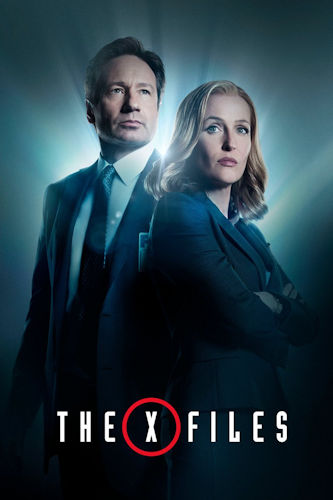
Watch The X-Files on Prime Video
A young FBI agent is assigned watchdog duty over a fellow agent, but finds herself drawn into his investigations of paranormal and unexplained phenomena.
Watch Now!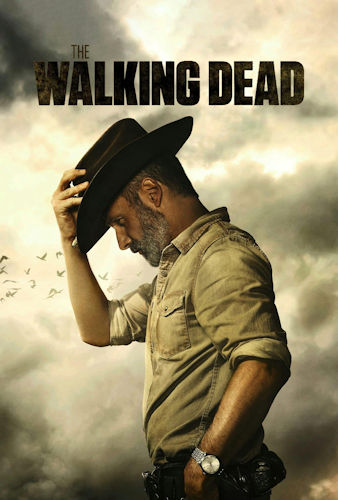
Watch The Walking Dead on Prime Video
County Sheriff Rick Grimes, his wife, son and a small eclectic group try to survive constant attacks from zombies and other threats.
Watch Now!As an Amazon Associate I earn from qualifying purchases.