✨ Byte-Sized Overview
The aliens have arrived, cured diseases and offered humanity technology beyond its wildest dreams. Naturally, somebody really ought to read the small print.
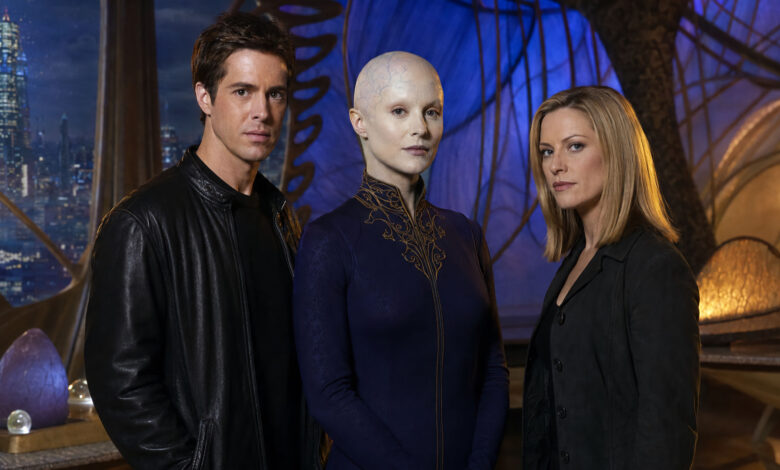
Earth: Final Conflict begins with an unsettling question: what if an alien takeover looked less like an invasion and more like the greatest humanitarian programme in history?
The Taelons, publicly known as the Companions, have become indispensable to Earth. Governments welcome them, ordinary people celebrate their achievements, and their human protectors enforce an increasingly complicated relationship. Beneath the gratitude, however, a resistance movement suspects that humanity is being prepared for something nobody agreed to.
Developed from an idea by Gene Roddenberry, the series combines first-contact speculation with espionage, political manipulation and biotechnology. Its strongest material explores the uncomfortable space between cooperation and dependence.
It also changes considerably across its five seasons. Expect shifting protagonists, expanding alien mythology and a final season that feels markedly different from the thoughtful conspiracy drama that started it all.
🎬 Transmission Details
- Show title: Earth: Final Conflict
- Years: 1997–2002
- Created by: Gene Roddenberry, from a concept developed for television after his death
- Network (US): First-run syndication
- Network (UK): Sky One
- Seasons: 5
- Episodes: 110
- Starring: Kevin Kilner, Robert Leeshock, Lisa Howard, Von Flores, Leni Parker, Anita La Selva, Jayne Heitmeyer, Richard Chevolleau, David Hemblen and Melinda Deines, across the series’ run
Majel Barrett-Roddenberry helped bring her late husband’s project to television, served as an executive producer and appeared as Dr Julianne Belman. The original concept was called Battleground: Earth.
Despite the Roddenberry connection, this is a separate universe, not a Star Trek spin-off.
Start with “Decision” and watch in broadcast order. Individual episodes have their own investigations, but the changing alliances and alien revelations depend heavily on what came before. Each season contains 22 episodes.
🎯 Signal Strength
- IMDb: 6.3/10
- Rotten Tomatoes: No overall critics’ score / 60% average audience score
- Skully’s take: The aliens bring medical miracles, effortless travel and complimentary brain implants. Two of those sound considerably more reassuring than the third.
Ratings checked on 1 September 2026. Rotten Tomatoes’ audience score is based on a small number of ratings.
The first season offers the clearest expression of the premise: intelligent suspicion, divided loyalties and aliens whose intentions cannot be reduced to a simple invasion plan. Later seasons introduce worthwhile characters and ideas, but repeated changes of direction weaken the sense of a coherent journey.
Best approached as an ambitious, uneven cult series rather than a tightly planned five-season epic.
📼 Spoiler Mode: Story Sync for Pub Chat
Warning: major spoilers for all five seasons, including the ending, follow.
The story opens three years after the Taelons’ arrival. Their technology has transformed life on Earth, making resistance to their presence appear ungrateful, paranoid or dangerous. Police commander William Boone becomes caught between public enthusiasm and private suspicion when he helps protect the North American Companion, Da’an.
After Boone’s wife is killed, he accepts a position as a Companion Protector while secretly joining the resistance led by businessman Jonathan Doors. His new employers give him a Cyber-Viral Implant, which enhances his mental abilities, and a living weapon called a Skrill, bonded to his arm.
Ordinarily, the implant also imposes loyalty to the Taelons. Boone’s has been modified by resistance doctor Julianne Belman, allowing him to retain his independence. Working alongside pilot Lili Marquette and hacker Augur, he investigates the people he is officially employed to protect.
His relationship with Da’an complicates the mission. The Companion can be genuinely interested in humanity, yet remains implicated in a system that treats people as resources. Meanwhile, fellow Protector Ronald Sandoval demonstrates how thoroughly service to the Taelons can override ordinary moral boundaries. Boone discovers that Sandoval arranged his wife’s death to remove an obstacle to his recruitment.
Investigations uncover covert experiments, manipulated memories and the exploitation of technology presented as a gift. Evidence of an earlier Taelon visitor, Ma’el, also reveals that the relationship between Earth and its supposed new friends reaches much further into the past than humanity realised.
The first season ends with the emergence of Ha’gel, a surviving Kimera. After assuming Sandoval’s form, Ha’gel fathers a child with Protector Siobhan Beckett. Boone is critically injured during the crisis, and Zo’or apparently destroys him while he lies helpless.
Beckett’s child matures at extraordinary speed and becomes Liam Kincaid, the central protagonist from season two. His mixed human and Kimera heritage gives him unusual abilities, while his position as Da’an’s new Protector places him inside the same divided world Boone occupied.
The larger conflict becomes clearer: the Taelons are fighting the Jaridians, and their investment in Earth includes preparing humans to serve that struggle. Zo’or’s leadership grows more coercive, while Da’an’s relationship with Liam moves between friendship, secrecy and betrayal.
A staged assassination attempt against the American president allows the resistance to be branded a terrorist threat. Martial law follows. Lili’s attempt to destroy the Taelon mothership fails, and her apparent death conceals captivity and further manipulation.
From season three, business executive Renee Palmer becomes a crucial resistance figure and Liam’s close partner. Lili, meanwhile, is sent into space and tricked into helping the Jaridians obtain interdimensional travel technology. She eventually returns carrying a human-Jaridian child, making the connections between the rival species intensely personal.
By season four, survival is overtaking conquest as the central concern. The Taelons’ core energy is running out, while the Jaridians face their own biological crisis. Liam pursues a solution involving Ma’el’s regeneration chamber and a reunion of the two related species.
The attempt ends disastrously. Liam disappears, the familiar Taelon order collapses, and the aftermath opens the way for the Atavus, predatory beings who feed on human life energy.
Season five shifts its focus to Renee and Juliet Street battling this new threat. Sandoval allies himself with Atavus leaders Howlyn and Juda, helping their efforts to create human hybrids. The struggle becomes more direct and action-driven, with humanity once again slow to recognise the danger.
In the finale, Liam returns to help Renee stop Howlyn’s plans for an army of Atavus warriors. Sandoval is killed by Renee, and Howlyn falls to one of his own kind. The immediate threat is defeated.
Liam, Renee and the surviving Taelon Ra’jel then leave aboard the mothership, taking peaceful Atavus towards a new future. It is an ending rather than an abrupt cancellation cliffhanger, although several earlier mysteries and character threads never receive equally satisfying closure.
🧠 Vibe Check
- 👽 Benevolent visitors with deeply questionable terms and conditions
- 🕵️ Double agents, resistance networks and institutional paranoia
- 🧬 Living weapons, altered minds and experiments on humanity
- 🌍 First-contact politics that gradually expand into a struggle between species
Perfect if you like: V for alien visitors and hidden agendas, The X-Files for conspiracy and compromised institutions, or Babylon 5 for uneasy diplomacy and competing ideas about humanity’s future.
🚀 Why It’s a Sci-Fi Icon
Earth: Final Conflict is better described as a distinctive cult favourite than an undisputed classic. Nevertheless, its central ideas and unusual alien presence give it a recognisable place in late-1990s science-fiction television.
- 🌍 First Contact with Consequences: The series begins after the spectacular arrival, when humanity is already reorganising itself around alien assistance. That makes dependency, influence and consent more important than the initial shock of discovery. The difficult question is whether a society can freely reject benefactors it has come to rely upon.
- 👽 Aliens Who Feel Alien: The Taelons’ controlled movements, restrained speech and luminous appearance distinguish them from straightforward human adversaries in prosthetics. Their calmness can suggest spiritual sophistication or chilling detachment, sometimes within the same conversation. Da’an is especially effective because neither interpretation entirely cancels the other.
- 🧠 Technology That Changes Loyalty: The Cyber-Viral Implant turns an enhancement into a means of control. Improved memory and reasoning are offered alongside an assault on personal autonomy. It is a strong science-fiction device because the benefit is real, while the hidden cost reaches into the recipient’s ability to choose.
- ⚖️ Resistance Without Easy Innocence: Opposing the Taelons does not automatically make every human decision wise or humane. Secrecy, ambition and competing strategies create tensions within the resistance itself. The early premise works because neither accepting alien authority nor fighting it offers a comfortable escape from responsibility.
- 🖖 Roddenberry Beyond Starfleet: The show offers a revealing companion to Roddenberry’s more familiar vision of interstellar cooperation. Humanity is not approaching other species from a confident position of equality. It is negotiating from weakness, with the possibility that apparent generosity may conceal a profoundly unequal arrangement.
- 🎭 A Memorable, Unstable Ensemble: Cast changes are among the programme’s frustrations, but its best characters remain distinctive. Boone’s cautious investigation, Da’an’s ambiguity, Sandoval’s ruthlessness and Renee’s determination each support a different version of the premise. The series demonstrates both the possibilities and the costs of repeatedly rebuilding a continuing drama.
🔦 Deep Dive Highlights
- 👮 William Boone: Kevin Kilner gives the opening season a grounded viewpoint through a policeman navigating extraordinary circumstances. Boone’s double life makes every encounter with his employers potentially dangerous. His strongest quality is caution: he needs evidence and understanding, even while personal grief threatens to overwhelm his judgement.
- 👽 Da’an and Zo’or: Leni Parker and Anita La Selva embody contrasting approaches to humanity. Da’an appears contemplative and capable of connection; Zo’or is more openly domineering. Their differences make Taelon politics interesting, while preventing the reassuring mistake of assuming a sympathetic individual can make an entire system harmless.
- 🕶️ Ronald Sandoval: Von Flores provides the series’ most persistent human presence, remaining a regular throughout all five seasons. Sandoval’s immaculate professionalism masks coercion, ambition and increasingly personal schemes. He is particularly unsettling because alien power does not eliminate human opportunism; it gives it new tools.
- 🧬 Liam Kincaid: Robert Leeshock’s arrival shifts the programme towards a younger, more overtly action-oriented lead. Liam’s unusual background places him between communities rather than securely inside one. His relationships with Da’an and the resistance repeatedly test whether understanding an opponent can coexist with refusing to accept their actions.
- 💼 Renee Palmer: Jayne Heitmeyer brings corporate confidence and practical resolve to the resistance. Renee operates in a world where influence comes through boardrooms as well as weapons, making her a useful bridge between the programme’s political and action elements. Her importance grows considerably as the series progresses.
- 🛸 Taelon Technology: Organic architecture, interdimensional shuttles, brain implants and the arm-mounted Skrill give the show a coherent visual vocabulary. The most interesting inventions are not simply impressive gadgets: they change the balance of power between user and provider, making every technological convenience a possible point of vulnerability.
Recommended Sci-Fi TV Products
Watch Star Trek: Strange New Worlds on Prime Video
STAR TREK: STRANGE NEW WORLDS is based on the years Captain Christopher Pike manned the helm of the U.S.S. Enterprise. The series will follow Captain Pike, Officer Spock and Number One in the years before Captain Kirk boarded the U.S.S. Enterprise.
Watch Now!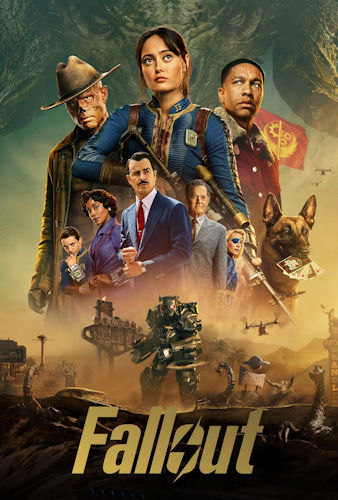
Watch Fallout on Prime Video
Based on one of the greatest video games of all time, Fallout is the story of haves and have-nots in a world in which there’s almost nothing left to have.
Watch Now!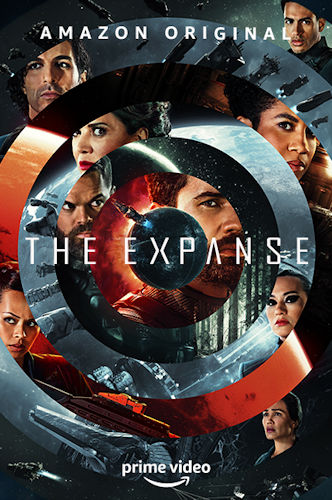
Watch The Expanse on Prime Video
Amidst political tension between Earth, Mars and the Belt, the single greatest conspiracy of all time must be unravelled.
Watch Now!As an Amazon Associate I earn from qualifying purchases.